VERSIONS: روسيا اليوم NOTICIAS FREEVIDEO ИНОТВ RTД
breakingnews
Go to main page   News   Wild and woolly: Canadian bison thrive in Siberia  
MORE ON THE STORY
05.01.2010, 09:07 10 comments

Fur-coats: the divisive must-have for Russian women

Regardless of how cold it gets, the streets of Russian cities in winter are reminiscent of a fur fashion catwalk, with a kaleidoscope of women in pelts of all sizes, colors and designs.

29.10.2010, 05:12 2 comments

Bear scare: hungry animals get closer to people

The bear is one of the iconic images of Russia. However, in some parts of Russia the relationship between these animals and people has become less than cordial this autumn.

26.02.2009, 19:28 3 comments

Baby seal hunting banned in Northern Russia

The government has banned the hunting of baby seals in the regions surrounding the White Sea.

the Manych Gudilo 20.06.2009, 16:23 1 comment

Birdlife diminishing in Russia’s southern wetlands

RT’s Close-Up series travels to the South of Russia, in the Rostov Region at the mouth of the River Don, where the variety of species of birds takes your breath away.

06.08.2010, 11:30 1 comment

Tiny jellyfish thrive in Moscow River

As the record breaking heat wave continues to torment Russians, Mother Nature draws new surprises from its sleeves. A boat owner has caught half a dozen tiny freshwater jellyfish in the Moscow River.

26.01.2009, 18:09

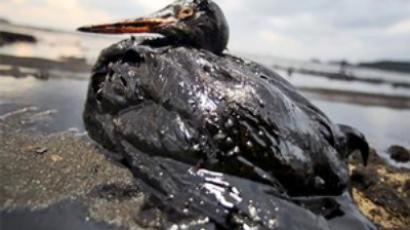
Oil slick kills hundreds of birds

Scientists in Russia’s Far East are trying to identify the source of an oil slick that has wiped out vast numbers of birds in Aniva Bay near the southern Sakhalin coast.

Merry Christmas the crane 04.02.2009, 14:03

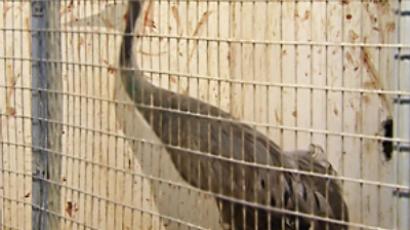
A bird in the hand

The harsh winter of the Moscow region could have proved deadly for this crane. But he was saved from the snowy marshes on Christmas day by a local resident.

18.03.2009, 16:18

Russia introduces complete ban on baby seal hunt

Russia has finally imposed a complete ban on hunting Greenland seal pups, the credit for which should be partially given to the efforts of public ecological organisations, the Natural Resources and Ecology Minister said.

20.04.2009, 14:10

Siberia home to vegan piranhas

Russian marine scientists are preparing a search for piranhas. The normally warm water-loving fish was spotted in a most unlikely area – a reservoir in the cold Siberian region of Kemerovo.

08.10.2009, 21:31

Birds over Moscow dump menace Sheremetyevo airport

Waste disposal dumps are never popular, especially if you live near one. But a trash heap near Moscow is causing alarm further afield, with one of the city's airports claiming it could endanger lives in the sky.

Wild and woolly: Canadian bison thrive in Siberia

Published: 09 January, 2009, 22:09

(5.3Mb) embed video

TAGS: Animals, Ecology, Russia


Bison are making a comeback thousands of years after they disappeared from eastern Russia. Bison breeders in Siberia are hoping the return of the huge woolly mammals to the region will help boost eco-tourism.

Two thousand years ago the bison left the region that is now the Republic of Yakutia in Siberia, but now they’re back – and thriving.

The bison had become extinct in Russia, but thanks to Canada that they're home again.

Thirty Canadian-born woolly bovines have now spent three winters at the Lensky Stolby Nature Park, 100 kilometres south of Yakutsk. Local herdsmen say they've settled in nicely.

“They're good at enduring the cold and they've adapted extremely well. They look happy here and I've become really attached to these beautiful animals,” bison herder Sergey says.

A good indication of how well these bison are adapting to their new environment is their ability to reproduce. Already six babies have been born into this herd – a sure sign that they're thriving in their former homeland.

Bison were taken from Canada as part of the world's first bison resettlement programme. Canada wants to conserve species at risk. So this project is a chance to secure the global survival of the Red Book bison. The Red Book is a list of endangered species.

Meanwhile, wildlife conservationists say the bison will soon be the region's star attraction.

“We're aiming to create an eco-tourist park here. There's been so much interest in the bison, so eventually we want to re-introduce all animals that once roamed this land,” says Yakob Sivtsev from the Conservation Ministry.


+100 (112 votes)
 
Back to top
next MORE NEWS
09.01.2009, 19:12

Five killed in Tambov car crash

A head-on collision has resulted in the deaths of five people.

AFP Photo / Mohammed Abed 09.01.2009, 22:14

War takes toll on Gaza children

Since the Israeli offensive in Gaza began in December, it is estimated that some 770 Palestinians. Roughly half of them are believed to be civilians, with children perhaps the most defenceless victims of the conflict.

Gleb August 16, 2009, 23:06
0

In fact the productive potencial in terms of "wild" (i.e. "free of expenses") meat and eco-tourism potential of Siberia are enourmous. It far surpasses the National Parks of Africa since the land itself is breathtakingly picturesque and we have more native big species then the southern countries. With one sad exception - our versions of elephants and rhinos, since the ones we had are totally destroyed by now - mammoth and whoolly rhino. But we CAN bring ALL the others - for the benefits of eco-friendly tourists, for the benefits of rich "trophey"-hunters and for the benefits of local people who have to live in Siberia - and to-day, with all those wonderful big animals gone and only the reindeer left the Northern Siberia is a real wasteland. Why not bring the original life back here? Thanks to Segei Zimov. It was his idea and his efforts in the first place - to bring the wood bison back to their homeland in Yakutia. Into the National Pleistocen Park he created and reasioned. It is very pity that has has not obtained the bisons for the scientific Pleisotcene Park as yet. All people here who want to see our empty Northen land teeming with life again wish him success.

Gleb August 16, 2009, 23:04
0

And mind that the wood bison is not the only BIG animal that used to call Norhtern Siberia sweet home. The North Eastern endless cold lands were home of the Wild Yak - all the way from Tibet to the mountains of Chukotka and into Alsaka (!) the Wild Yaks were common wild bovine of highlands. They fit estremely well into the complex ORIGINAL ecosystems of Siberia with millions of big animals - bison, yak, muskox, Wild Horse, Kulan, reindeer, moose, red deer, Wild Baktrian Camels, wolves and ... lions. Today the wild yak is hardly able to survive in the Chinese Tibet where it obtain little protection frompoaching and little available food - most of the lands this fantastically beautiful huge animal has now are simply semi-deserts. The same is true with the Wild Przewalski Horse and Wild Camels. The former are exterminated by 60s and the latter are hardly alive today in a coulple of tiny refuges between China and Mongolia, the last true wild camels on Earth are less numerous than famous giant panda. Yet no one cares. Why do not we bring them back home to Yakutia and other parts of Siberia as well?

Bogdan May 07, 2009, 08:22
0

This is long overdue...it should have been done 150-200 years ago and by now thousends if not milions woud roar through Siberian planins for the benefits of local population.