Europeans argue over money to aid democracy in Arab world
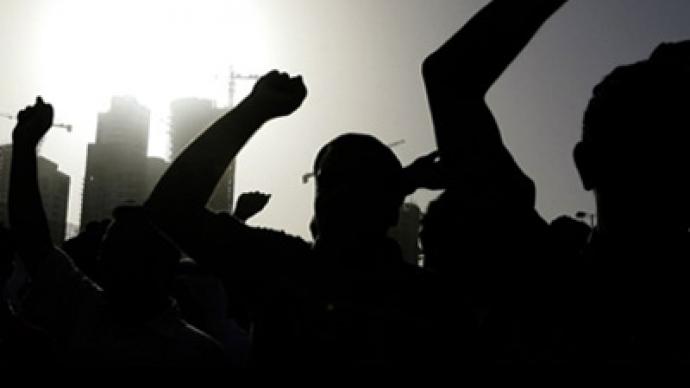
Western nations are debating multi-billion dollar aid deals for what is seen as democratic and economic transformation in North Africa and the Middle East. But this is cash that many Europeans feel they do not have to offer.
In the battle for hearts and minds in the Middle East, a new front has opened up.While politicians in Europe and the US say the West should show the troubled region the tangible fruits of freedom, some believe the money is more needed at home.“I think we should be concentrating more on the people at home. They do deserve some money to help them with democracy, but we need to look after our own first,” a passer-by in London says.“At this moment, our country’s going through these big cuts and that money, I think, could be used for our own benefits,” says another. For many citizens in the EU it is the worst possible time to be pumping cash into uncertain regimes, taking into account European economic tensions and problems. Greece is paralyzed with a nationwide strike, as thousands of workers left their job to protest against the recession going from bad to worse. Moreover, more than one in three young people in Greece are unemployed. Interior Ministries of southern European states, like Spain and Italy, are meeting at the moment to find a way to deal with the desperate migrants from North Africa and Middle East who are coming to the EU’s shores. Angela Merkel, chancellor of Germany, is giving a speech on Wednesday to declare that the financial problems of southern Europe will not spread to Germany, on the one hand reassuring, but on the hand concerned at the very fact she has to address people with such words in the EU’s strongest economy.The aid package being proposed by EU and US leaders is potentially the biggest one since the end of World War II. It is being dubbed the “New Marshall Plan”, after the money that America gave to Europe after the war to help rebuild a decimated economy and create jobs. But Robert Oulds from the Bruges Group says we should be concentrating on trade, not aid.“Countries like Egypt and Tunisia and other developing nations are hurt, are damaged as a result of the European Union’s agricultural policies. We need to have trade policies which stop hurting the Third World, which stop hurting developing nations, and that would be the better way of securing long-term prosperity for countries which are emerging democracies.”Instead, Europe and the US are talking about handing over between $200 billion and $300 billion to the Middle Eastern and the Mediterranean countries torn apart by revolution and unrest. And despite the opposition in the UK, there are also some who believe it is the duty of developed countries to help those in trouble.“We’re lucky to have a democracy and we should support democracy throughout the world,” say people in the street. “I think the Middle East needs our help, it’s going through quite a transition at the moment, and despite our problems at home, we can’t just close up – we have to look at the world as the place we live in.”But it may not be as simple as that. Unlike Europe after World War II, Egypt and Tunisia are not war torn. They are developing economies going through a revolution. And it is very unclear at this point who is going to end up in charge, and who would take receipt of any aid package.“The government has made extensive attempts to build up regimes which are now being destroyed by revolutions, whether we are looking at military aid over the years to Egypt, or whether we are looking at big deals that Tony Blair was shaking hands on just a few years ago in Libya. So we need to be really careful, particularly when we don’t know what the shape of the final governments in these areas will be, that we don’t wind up with resources ending up in the wrong hands. So if the Muslim Brotherhood takes over in Egypt, do we want them to be taking over with institutions built up with Western taxpayers’ money?” says Matthew Sinclair, director of the Taxpayers’ Alliance.Conflicting tensions can already be seen on the streets of Europe. While Westminster has become the scene of demonstrations over proposed government cuts to some of the UK’s most vital services, in Brussels Arab immigrants gather on the streets to call on the European government to help the new democratic regimes in the Arab world, struck with unrest. While some undoubtedly believe it would be a sad day when Western governments refuse cash to help build democracy, others say this is the wrong help, potentially going to the wrong people, and at the wrong time for a cash-strapped Europe.
Professor Paul Vallet from the Fletcher School of Law and Diplomacy at Tufts University in Massachusetts says that the U.S. and the EU, in their current financial situation, should cooperate to help North Africa and Middle East to tackle their crisis."The timing of this particular crisis corresponds with a very delicate passage in the recovery of the both the European and US’s economies. It has been suggested that the Europeans and the Americans should act in partnership. That is also one of the reasons we see this dubbed as the “Marshal plan” that one of two sides of the Atlantic would not be able to deal alone with the magnitude of the North African and Middle Eastern crisis in an aid package," says Vallet.
Arab immigrants in Brussels have gathered for a demonstration. They were calling for the EU states to do much more to force out dictators like Gaddafi. But passersby who were watching the demonstration responded that they need too. The number of unemployed is rising. The EU countries are talking about supporting these new regimes in North Africa and the Middle East, but they are not ready to deal with the consequences, reports RT’s correspondent Daniel Bushell.
Meanwhile, in Greece hundreds of thousands of demonstrators ceased working across the country in the first major labor protest of 2011. Tear gas spread by the police in response to demonstrators’ violence, covered the city’s centre and forced many peaceful demonstrators to flee. People are chanting “don’t obey the rich fight back”. A group of protesters came to parliament demanding the socialist government in Greece change austerity measures that will see cuts in spending and a hike in taxes.