VERSIONS: روسيا اليوم NOTICIAS FREEVIDEO ИНОТВ RTД
breakingnews
Go to main page   News   Not gone fission: New fears at Fukushima  
MORE ON THE STORY
Photo from http://www.tepco.co.jp 29.10.2011, 19:21 5 comments

Fukushima: Exposure underrated, outcome obscure

The consequences of the Fukushima disaster will be emerging for at least several decades. According to the Japanese government, it will take up to 30 years for the complete clean up of the radiation released from the reactors.

Fukushima nuclear disaster
Damaged heavy oil tank, caused by tsunami, being removed from TEPCO's Fukushima Dai-ichi nuclear power plant at Okuma town in Fukushima prefecture (AFP PHOTO / TEPCO) 26.07.2011, 12:10 2 comments

Fukushima crisis to be resolved in six months

After visiting the Fukushima nuclear plant and meeting with Japan’s prime minister, the head of the IAEA, Yukiya Amano, has promised to provide all necessary expertise to complete the second phase of containing the crisis by early next year.

Earthquake in Japan Fukushima nuclear disaster
Almost half the children in Fukushima test positive for radiation (AFP Photo / Nicolas Asfouri) 05.07.2011, 13:52 8 comments

Almost half the children in Fukushima test positive for radiation

Some 45 per cent of 1,080 children under 15 from the Japanese Fukushima Prefecture have tested positive for thyroid exposure to radiation, a nuclear watchdog report says.

Fukushima nuclear disaster
Dispersion by bending spray tower vehicles to Turbine Building at Unit 1 (Photo from http://www.tepco.co.jp) 28.06.2011, 13:55 2 comments

Fukushima operator says “sorry” as workers erect protective cap

The leadership of TEPCO, the company operating the crippled Japanese Fukushima plant, has apologized for the disaster earlier this year.

Fukushima nuclear disaster
Stations running at full capacity 12 May 2007 in Byron, Illinois (AFP Photo) 28.06.2011, 02:29 15 comments

Non-nuclear energy failed Fukushima – nuclear energy expert

Events at Fukushima should not be called a nuclear disaster, says John Ritch, Director General of the World Nuclear Association. He explains to RT why he thinks nuclear energy is still one of the safest sources of power – and getting safer.

Fukushima nuclear disaster
Members of a governmental panel inspecting the damaged building housing reactor number three at the Fukushima Dai-ichi nuclear power plant, Fukushima prefecture (AFP Photo / HO / Japanese Goverment via Jiji Press) 27.06.2011, 09:21 1 comment

Fukushima Prefecture “like another universe” to Greenpeace activist

Jan Beranek, who is with a team of Greenpeace activists investigating the fallout from the Fukushima nuclear disaster, says Japanese are encouraged to return to their normal lives unaware of the dangers they face in the contaminated area.

Fukushima nuclear disaster
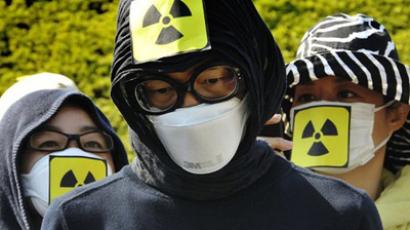
Tokyo : Protestors wear masks as they protest against Japan's nuclear policy during a parade for Earth Day in Tokyo on April 24, 2011.  (AFP Photo / Yoshikazu Tsuno) 27.06.2011, 08:17 3 comments

Japanese fear authorities hide ugly truth about nuclear risks

The Japanese government is starting radiation checkups for more than two million people living near the crippled Fukushima plant. But many citizens of the country fear those in charge prefer face-saving public ignorance to life-saving knowledge.

Fukushima nuclear disaster
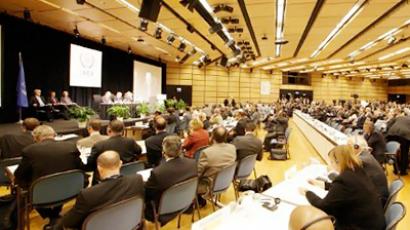
The opening ceremony of a five-day ministerial conference on nuclear safety, convened by the IAEA in Vienna AFP Photo / Dieter Nagl 21.06.2011, 09:50 1 comment

Nuclear forum calls for transparency, eyes new incident severity scale

Renewing public trust in nuclear energy after the Fukushima disaster is high on the agenda of the four-day nuclear forum in Vienna, which started on Monday.

Not gone fission: New fears at Fukushima
Published: 02 November, 2011, 15:08

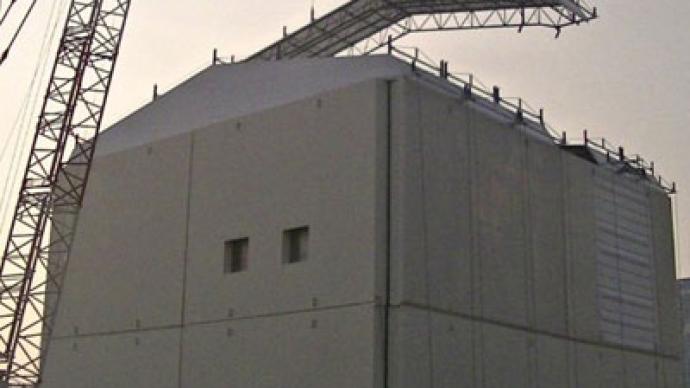
A roof panel installed by a large crane at the unit 1 reactor building of TEPCO's Fukushima Dai-ichi nuclear power plant at Okuma town in Fukushima prefecture on October 28, 2011 (AFP Photo / TEPCO)

A roof panel installed by a large crane at the unit 1 reactor building of TEPCO's Fukushima Dai-ichi nuclear power plant at Okuma town in Fukushima prefecture on October 28, 2011 (AFP Photo / TEPCO)

TAGS: Health, Natural disasters, Nuclear, Scandal, Physics, Japan


The radioactive gas Xenon has been detected at Fukushima Dai-Ichi, meaning that out-of-control nuclear fission might be still going on in the remnants of the active zone of reactor two.

­The officials of the nuclear power plant have ordered to pump in boric acid as a precaution measure to stop the possible fission.

The Tokyo Electric Power Co. (TEPCO) reported that tiny quantities of relatively harmless Xenon-133 and Xenon-135, a nuclear fission by-product with a half life of a little more than five days, were registered near the second reactor. At the same time it has been reported that no increases in temperature, pressure or radiation have been registered.

The nuclear fuel of the second reactor followed the fate of the first and third, melting down and burning through the contour of the reactor. Experts say that at certain conditions nuclear fission could restart and lead to a new meltdown, but the likelihood of such an event is next to zero. They even question the fact that the gas that was registered has been radioactive Xenon as the quantity of it was too small and there is a room for mistake in conclusions.

Currently the temperature at the hot zones of the reactors is been sustained at 100 degrees Celsius by sea water constantly pumped there.

This news follows a recent report in the Atmospheric Chemistry and Physics journal, arguing that radiation fallout after the Fukushima catastrophe could be underestimated by as much as 80 per cent. The report claims the registered contamination with cesium-137 depicts only about 19 per cent of the radioactive debris which actually fell on Japanese territory. The rest was dissolved in the Pacific. It is believed that only two per cent of cesium from Fukushima will reach foreign coasts.

Scientists from Europe and the US claim that after the earthquake and tsunami on March 11, the wreckage at the nuclear power plant caused emission of 35,800 terabecquerels of radioactive cesium-137 at the height of the disaster, whereas Japan's nuclear regulator officially stated in June that ‘only’ 15,000 terabecquerels of cesium-137 had been discharged.

The catastrophe at Fukushima Dai-Ichi has also been responsible for discharged of 16.7 million terabecquerels of Xenon-133, “the largest radioactive noble gas release in history not associated with nuclear bomb testing,” said the report at Atmospheric Chemistry and Physics journal.

Radioactive isotope cesium-137 has a half-life of 30 years, thus making it the major source of concern over public health in Japan for the nearest decades. Official Tokyo estimates in August stated that areas around the Fukushima Dai-Ichi plant would be uninhabitable for at least two decades due to debris that is still emitting radioactive materials.

According to the World Nuclear Association, prolonged exposure to radiation causes leukemia and other forms of cancer.

Atmospheric Chemistry and Physics journal scientists’ estimation puts Fukushima fallout to 42 per cent of that of the Chernobyl catastrophe in 1986.

They also reported that it was the 9-magnitude earthquake that destroyed the power plant that started the nuclear core meltdown, with the tsunami only finishing the station off.


+4 (4 votes)
 
Back to top
next MORE NEWS
Vanessa Hessler (AFP Photo / OLIVER LANG) 02.11.2011, 14:14 21 comments

Model fired for Gaddafi sympathies

Considering the Gaddafi family to be “normal people” can cost you a job, as a German-based model discovered after an interview about her relationship with Muammar Gaddafi's son Mutassim.

Libyan conflict
British Foreign Secretary William Hague addresses delegates at the London Conference on Cyberspace in London on November 1, 2011 (AFP Photo / PETER MACDIARMID) 02.11.2011, 15:23 4 comments

Cyber champions’ shiny armor dented

A clash between a freedom-loving West and internet censure-seeking Russia and China has started at a high profile conference on cyberspace in London. At least that is how some view the event.