Tunguska: 101-years-long deadly comet tail
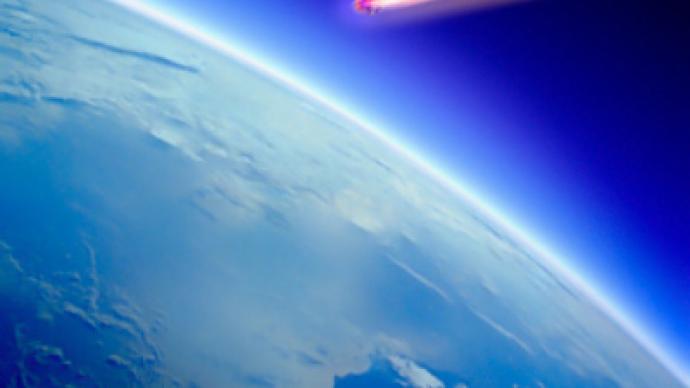
The Tunguska Explosion, presumably caused by a comet, is the greatest space catastrophe humankind has ever witnessed. Even a century later, the Siberian blast still attracts scientists who hope to unveil its mystery.
A powerful explosion in East Siberia shook the Earth in the early morning of June 30, 1908, or June 17 in the Julian calendar that was then in use in the Russian Empire.
The energy of the explosion was most likely equivalent to around 10-15 megatons of TNT, or about 1,000 times the power of the Little Boy atomic bomb that was dropped on Japan’s Hiroshima by the United States at the end of the World War II.
The blast was registered on seismic stations across Eurasia. It produced fluctuations in atmospheric pressure strong enough to be detected in Great Britain. Over the next few days, night skies around the continent were aglow. In some places, for example in London, people could read in the light.
Scientists theorized that this was due to light passing through high-altitude ice particles, the cause of the space body having entered the atmosphere and then exploded.
Back in the Tunguska River area, a staggering 2,200 square kilometers of the taiga forest with 80 million trees was destroyed. Had the event happened some four hours later, St. Petersburg would have been wiped out along with all the villages surrounding it.
The trees around the epicenter of the blast toppled over in a radial pattern. But those in it remained standing. Their branches were stripped so that they looked like telegraph poles.
This phenomenon was discovered by Soviet scientist Leonid Kulik, who in 1927 led an expedition to the area. He measured the 2,000 square kilometers of devastation and recorded images of fallen trees. Kulik concluded that the blast was caused by a meteorite crashing down to earth.
More than a century after the blast, the mystery of the event is still attracting scientific expeditions from all over the globe.
Lake Cheko and meteorite
Kukik, like the hundreds of later investigators, failed to find any traces of a meteorite having collided with earth surface; neither any particles, nor the crater.
This month, however, an international group of researches from the University of Bologna, Italy, and Cornell University in the US headed to the Siberian taiga in an attempt to discover more details, RIA Novosti reported.
The Italian group hypothesized that the elongated Lake Cheko is a possibly an impact crater from the event. They do not dispute that the Tunguska body exploded mid-air, but believe that a one-meter fragment survived the explosion and impacted the ground.
However, a thorough search for evidence, including underwater exploration with sonar, video cameras and other tools and techniques, gave little result. Other scientists dismiss this hypothesis, too, pointing at the lack of a swell around the lake, which would have formed had the lake be a result of collision.
The local indigenous people, the Evenki, insist that Cheko Lake has “always been there.” In their language, it is called “dark water.”
The Italian scientists will continue search for evidence for the meteorite hypothesis and plan to make several drills around the lake.
Volcanic gas eruption
Their counterparts from Cornell University and the University of Florence, Italy, believe that the explosion was caused by the eruption of volcanic gases.
The two scientists have studied a 10-12 ton rock which they believe was projected from the depths by the volcanic gas. They also gathered a total of 30 kilograms of mineralogical samples, among which they hope to find a compressed quartz. The latter would serve an evidence of the volcanic activity, the same as basalt, which is especially abundant in the area.
Deadly comet tail
There are more than 100 theories behind the Tunguska event, including some as incredible as a UFO crash. Yet the most reliable and widely accepted is perhaps the version of a comet or part of its tail to have collided with earth.
“I agree it was something from outer space, but it’s more likely to be a fragment of a comet, a snowball-like body of ice and gas that exploded when it hit the earth's atmosphere,” Vitaly Romeiko, the head of the Zvenigorod Astronomic Observatory, told RT in 2008.
According to Romeiko, who has led 23 expeditions to the site and was also interviewed by RIA Novosti upon completion of the Italian-American expedition, the blast was caused by part of the tail of Encke’s Comet. This comet completes an orbit of the sun and approaches the Earth once every three years and four months.
The block of ice with impregnations of cosmic dust exploded as soon as it entered the Earth’s atmosphere, Romeiko said.
Olga Gladysheva, a senior researcher at the St. Petersburg-based Ioffe Physical Technical Institute, supported her colleague from the Moscow Region.
In an interview with RIA Novosti, she said that a part of the tail separated from the comet to form a block of ice, which then exploded at an altitude of 7-10 kilometers above the Earth’s surface in a series of blasts when its inner substance began to expand and break the block from inside.
The incredible power of the explosion is explained by the significant difference in the electric potentials, or charges, of the comet and the Earth.
Russian scientists dismiss the meteorite theory because neither particles typical of these space objects, nor a crater, have been found. As for the tiny bits of the comet, they could probably be found in the lower layers of moss, exactly where it freezes into permafrost.
With some 90 years of research behind the Tunguska Event and over 100 conflicting hypothesis pretending to be the best explanation, many express their doubts that one of the greatest mysteries of the 20th century will ever be unveiled. Yet it does not prevent others from planning new expeditions to one of the most remote places on Earth.