VERSIONS: روسيا اليوم NOTICIAS FREEVIDEO ИНОТВ RTД
breakingnews
Go to main page   News   Blast at Fukushima compounds fears of Japanese nuclear disaster  
MORE ON THE STORY
Vehicles are crushed by a collapsed wall at a carpark in Mito city in Ibaraki prefecture on March 11, 2011 after a massive earthquake rocked Japan 11.03.2011, 10:40 1 comment

Death toll expected to exceed 10,000 in tsunami-hit Japan

Northeastern Japan has been hit by a tsunami reaching 10 meters high in some areas that were caused by an earthquake measuring 8.9 on the Richter scale. The confirmed death toll has exceeded 900 with more than 10,000 missing and feared dead.

Earthquake in Japan
AFP Photo / Frank Rumpenhorst 12.03.2011, 09:48

No high-accuracy way to predict earthquakes – scientist

Science and research have still been unable to produce technology that can predict earthquakes with at least 90 per cent accuracy, said Yuri Urlichich, head of the Russian Institute of Space Device Engineering.

Earthquake in Japan
Light planes and vehicles sit among the debris after they were swept by a tsumani that struck Sendai airport in northern Japan on Friday March 11, 2011 11.03.2011, 15:29

Japan was well-prepared to react to earthquake – seismologist

Despite widespread damage resulting from the earthquake and tsunami which struck Japan Friday, authorities’ response was prompt and managed to avert a more serious course of disaster, says Dmitry Strochak from the International Seismological Center.

Earthquake in Japan
This aerial shot shows boats being carried away at a flooded marina in Hitachinaka city in Ibaraki prefecture on March 11, 2011 after a tsunami hit following an earthquake 11.03.2011, 14:54 4 comments

Putting disputes aside, Russia gears up to help quake-rocked Japan

President Dmitry Medvedev ordered Russia’s Emergencies Ministry to gear up to assist Japan in dealing with the aftermath of the major earthquake and tsunami that pounded the Asian country.

Earthquake in Japan
RIA Novosti / Sergey Starostenko 19.11.2010, 09:40

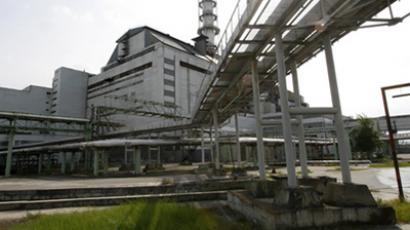
Radiation therapy – new European cap for Chernobyl

As scientists warn that much of the nuclear material still remains in Chernobyl, Europe is already building a new dome over the contaminated plant in order to protect the continent from another nuclear disaster.

Chernobyl
Image from un_chancho.livejournal.com 29.12.2010, 20:06

Dreadfully appealing – a place where Geiger counter goes mad

The Chernobyl zone is to be officially opened for tourists in 2011. According to Ukrainian news agencies, safe routes have been developed and are ready to be operated.

Russian Federation, Dolginino: A forest in fire is seen near village Dolginino on August 4, 2010. (AFP Photo / Artyom Korotaev) 06.08.2010, 08:35 2 comments

Wildfires could spread to region irradiated by Chernobyl disaster

The Russian Emergencies Minister is warning of possible radiation risks, as wildfires approach closer to the area affected by the Chernobyl nuclear disaster.

Chernobyl

Blast at Fukushima compounds fears of Japanese nuclear disaster

Published: 11 March, 2011, 22:17
Edited: 16 March, 2011, 16:12

Photos:
Japan evacuates thousands of residents living near the Fukushima nuclear power plant Japan evacuates thousands of residents living near the Fukushima nuclear power plant

Japan evacuates thousands of residents living near the Fukushima nuclear power plant

(17.3Mb) embed video

TAGS: Natural disasters, Nuclear, Asia, Ukraine, Yulia Shapovalova, Aleksey Yaroshevsky, Ivor Bennet


Fears of a nuclear meltdown intensified in Japan after an explosion at Fukushima power plant, which was damaged by Friday’s earthquake in the northeast.

Emergency crews and engineers are desperately working at the Fukushima nuclear plant in the tsunami-hit north to prevent a possible meltdown after a powerful blast at the facility.

Fifteen people are reported to have been exposed to radioactivity near the facility.

News agencies also say Japan's nuclear safety body has reported an emergency at a second reactor at Fukushima.

Japan’s Emergencies Ministry has ordered the evacuation zone to be expanded to 20km (12 miles) from the Fukushima plant.

Four workers are reported to have been injured in the blast, which also caused the collapse of four of the building’s walls.

Officials claim the explosion at the plant was caused by a failure in the pumping facility that had been used for cooling purposes, not in the reactor itself.

The authorities have been able to release some of the pressure inside the reactor, because it is still very high. The needed to release steam to release pressure, and they managed to do that without affecting the radiation.

At the moment radiation levels are said to be decreasing.

Japan’s nuclear safety watchdog has dismissed fears that the reactor may have melted, saying the actual structure of the reactor remains intact.

Watch footage of the explosion

embed video

Additionally, there are fears a leak could occur at another reactor – one of five which have been shut down in the country.

The cooling system failed in three reactors at the quake-hit Fukushima No.2 nuclear power plant Saturday, the operator, Tokyo Electric Power Co., said.

Fukushima is located just 160km (100 miles) north of Tokyo.

Several other nuclear power plants have also been shut down.

At the moment the authorities are distributing iodine to people in the area around the station, as it is used to prevent cancer caused by radiation.

People living in the area are being asked to cover their mouths, noses and any exposed areas of skin while outside, and as they get inside they should wash and scrub their skin thoroughly and avoid drinking tap water, as there are fears it is also contaminated.

The possibility of radiation emission in Fukushima would put in danger not only Japan, but the whole Russian Far East, large areas of China and the Korean peninsula.

In Russia’s Sakhalin Region, which is most closely located to Japan, a state of emergency has already been declared, but what effect a possible nuclear meltdown at Fukushima could have on the area is still unclear.

The explosion has been the result of the earthquake and tsunami that hit Japan on Friday morning.

So far, more than 900 people are believed to be dead, and more than 10,000 missing.

In the last 24 hours there have been over 100 aftershocks of the quake, one of the most powerful happening on Saturday afternoon near the east coast of Honshu, not far from the Fukushima region.

Kate Hudson, head of the Campaign for Nuclear Disarmament in London, says building nuclear plants on the shore line, like Japan or Britain do, because of the need for water passing through the station for cooling purposes, may lead to a very dangerous situation in case of a natural disaster like tsunami or a rising water level.

That situation in Japan, as I understand from nuclear activists there, is actually extremely dangerous. If they cannot cool the radioactive core of that reactor, then you run the risk of a meltdown, and then you run the risk of fire, massive radioactive release and a situation like Chernobyl or worse,” says Hudson.


embed video

­Valery Petrosyan, a UN expert on chemical safety, has joined the chorus of voices admitting there is real cause for concern about what is happening at the Japanese plant.

“The problem is very serious because we are talking about the possible destruction of chemical plants and nuclear power stations,” Valery Petrosyan said. “As for the chemical plant, evidently we are having in mind the possible contamination of both air and land with toxic chemicals. And as for the nuclear power stations, I have to say that the Japanese nation has become very sensitive to the problem of radioactive pollution after 1945, when two first American nuclear bombs were exploded over Hiroshima and Nagasaki.”


embed video

­However, Dr Richard Philips from the School of Earth and Environment at Britain's University of Leeds, says Japanese nuclear facilities are very well prepared for any natural disasters and the catastrophe is unlikely to happen.

They are very well prepared for earthquakes in terms of their nuclear facilities, and this is one of their core energy supplies.Their buildings are incredibly robust, they have done many tests, gone through lots of scenarios similar to what they are experiencing now. I‘ll be surprised if we do see any serious leakage from the Fukushima plant,” said Philips.



embed video

+13 (15 votes)
 
Back to top
next MORE NEWS
Chechen warlord Docu Umarov 11.03.2011, 22:05 3 comments

UN puts notorious Chechen warlord on wanted list

The man behind a string of deadly attacks across Russia, Docu Umarov, has been listed alongside the world’s most dangerous terrorists.

Global terrorism
EU leaders pose for a family photo during an extraordinary EU summit focused on Libya, on March 11, 2011 (AFP Photo / Jean-Christophe Verhaegen) 12.03.2011, 01:05 6 comments

European leaders call on Gaddafi to step down

Colonel Gaddafi must surrender power, the leaders of the EU’s 27 member countries have said in a unanimous declaration after an emergency summit in Brussels, and added they would examine “all necessary options” to protect Libya’s civilian population.

Arab world protests
LindsayJoanne (unregistered) May 19, 2012, 19:00
0

A lot of specialists claim that loan aid people to live their own way, just because they are able to feel free to buy needed things. Furthermore, various banks present term loan for young and old people.

Anni March 16, 2011, 01:58
0

How do You conclude that the entire west coast of North America would have significant radiation exposure?It's almost 600 km shorter way from Finland to Fukushima than from Fukushima to Seattle.

Boldizar March 13, 2011, 06:59
0

If there is a full meltdown, the entire West Coast of North America will have significant radiation exposure within ten days. Scary stuff.

If they start pouring concrete, I'd start eating potassium iodide, whatever the "experts" say. Governments always tend to downplay these dangers at first.

http://www.boldizar.com/blog/2011/03/if-there-is-a-meltdown/