Dawn of a new economic era? Soros convenes experts in Bretton Woods
With emerging economies taking a leading role, a new era could be dawning in the world of global economics. That was one of the main topics on the table at the Bretton Woods conference in the US, hosted by billionaire philanthropist George Soros.
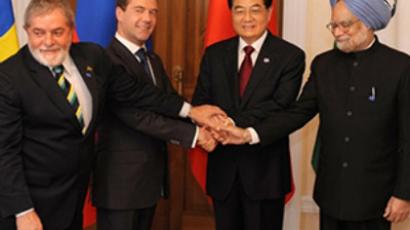
The economic theories expounded upon at the conference are ideas that could change the world; the sight of billionaire George Soros, together with PhDs and Nobel Prize winners against backdrop of historical Bretton Woods certainly suggests there is real hope that they will.It was there that the allied nations came together during World War II in crisis searching for stability. They formed the International Monetary Fund and what today is known as the World Bank, and established the US dollar as the global reserve currency.In New Hampshire, decades later in the wake of the latest financial crisis, a group of influential economists and former policy makers have come together to rethink that framework in response to a different world. "We have got to have a serious plan to reconstruct the international institutions, for the times we are in not the times that are gone," says British former prime minister Gordon Brown. By-gone times, says Brown, are the centuries of American and European dominance. With the BRIC nations of Brazil, Russia, India and China fueling more global growth, they need a bigger seat at the table.Critics say “in with the new,” should mean “out with the old” orthodoxy of Bretton Woods…and the IMF for one. "I think the IMF has mainly played a destructive role by promoting financial liberalization in many parts of the world that contributed to the financial meltdown," says Professor Gerald Epstein from the Political Economy Research Institute. And handling that meltdown in the United States, with billions going to bail out banks that are still too big to fail, is just one reason some of these critics are questioning the US dollar as the global reserve currency."If you have crony capitalism and you lose confidence in US institutions, which has happened since 2008, the quality of the dollar and of New York as the financial center can deteriorate very markedly," says Robert Johnson, executive director from the Institute for New Economic Thinking.“The problem that has been in a world of flexible exchange rates is that the dollar as the reserve currency gets a special benefit by being the reserve currency. Some of the imbalances don’t get corrected, and basically the US can get away with a lot of things other countries can’t,” Sassan Ghahramani, President and CEO of the New York-based SGH Macro Advisors, told RT.
Watch the interview in full.And deterioration in the political will for tough banking reform has some concerned we may be heading for another crisis."Depends on what one calls a crisis but I would have to say yes – the concentration of power in finance is greater today than it was before this crisis," says a former JP Morgan executive. But with mostly western academics talking shop, it is hard to say if the world will come away from Bretton Woods with any new roadmap. According to the man who still has Obama’s ear, his former top economic aid, no one is going to run to Washington and pass legislation next week. “These kinds of ideas in sphere after sphere have had very important effects," said Larry Summers, president emeritus of Harvard University. However, these effects are hard for some to see at this point.“Where is the political will for reshaping the world economy? Who has a proposal that's actually workable? There is plenty of conversation, particularly around the role of the dollar, but no consensus at all on how to replace that," says Professor Simon Johnson, MIT Sloan School of Management.It seems there is just consensus on the need for change, and a hope that sage wisdom will not just stay tucked in hills of Bretton Woods.