US concern for Mideast public not genuine – Egypt specialist

The US is defending its own interests in the region and that is impossible without pretending to support the democratic process prevailing in the region, says Middle East expert Barah Mikhail from Islamabad.
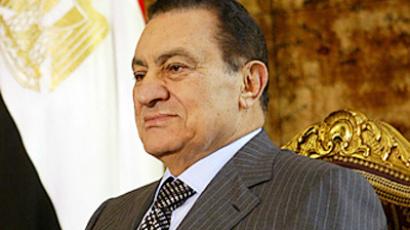
In the wake of the Egyptian revolution, activists in the Middle East are turning up the heat on their governments.Riots have broken out across the region. Two demonstrators were killed in Bahrain on Monday. An activist was also shot dead by police in the Iranian capital. The protest in Tehran took place just a day after the US State Department began inspiring Iran's opposition with Twitter messages. It's the first such riot in the country in over a year. On Tuesday, Iranian MPs called for opposition leaders to be tried and executed. US Secretary of State Hillary Clinton says Washington "clearly and directly" supports the protesters.Hillary Clinton called the Iranian regime “hypocritical.” She said that President Mahmoud Ahmadinejad rallied behind the protesters on the streets of Egypt, but now that he is witnessing protests in his own country, he is using harsh violence against the demonstrators. What to do with Iran is a big concern for the US.At the same time, the US is very nervous after watching events unfold in Egypt, where it supported President Mubarak for 30 years. The US now has to redefine its role there and also send out a message to other allies in the region that it will not leave them out in the cold – as it did, many say, to Mubarak.Mikhail argues that over the last decade US policy in the region has been based on support for authoritative governments, and that now it is trying to play both sides of the fence. “For example, at the beginning of riots in Egypt they did not really support the public,” he said. “But when they noticed that they could not do anything against the revolution which was taking place, then they decided to conform with public opinion and tell them they were in favor of the democratic process.”
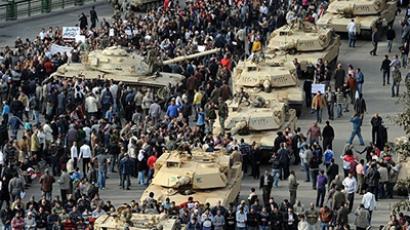
Egypt is gripped by labor strikes, where interim power is now in the hands of the military which is reworking the constitution.Professor Robert Springborg of the Naval Postgraduate School believes that with ideological splits in the military, the army leadership has more to worry about than US interference.“They will not want the military to be subject to civilian political control,” he said, adding that the primary concern of Egypt’s defense minister is business, not the military, but there are “officers who are professional and who think the business of the military should be the military, not the business itself.”
Author and researcher Adrian Salbuchi from Argentina says that US policy in the Middle East might work against national interests. “The US is trying to achieve a way to promote change in a way which will facilitate things for them,” Salbuchi said. “The global power structure which is entrenched inside the US might not be working in the national interest of the people of the United States. It has other, very specific interests which might even go against the national interest of the United States of America.”