After Libya, “Syria next piece on geopolitical chessboard”
Published: 03 April, 2011, 19:13
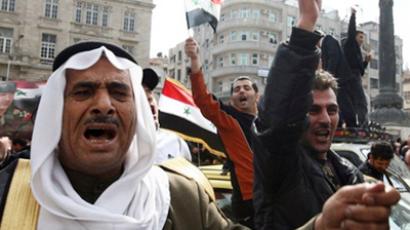
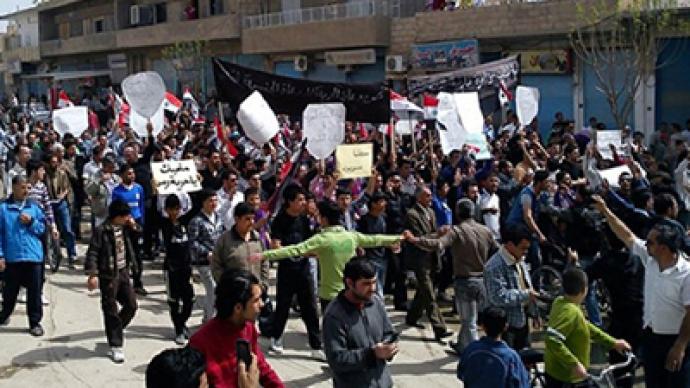
Syrian anti-government protesters, some holding signs reading "We only love freedom", march in the northeastern town of Qamishli on April 1, 2011 (AFP Photo / STR)
(15.7Mb) embed videoTAGS: Conflict, Africa, Middle East, Protest, Politics
The Libyan crisis may repeat itself in Syria, believes independent journalist James Corbett, who joined RT to discuss the latest developments in the Middle Eastern country.
On Sunday, Syrian President Bashar al-Assad appointed a new prime minister after dismissing the cabinet in an attempt to ease the unrest in the country.
Dozens have been killed in two weeks of fighting. The government blames outside influences for the unrest.
The extraordinary wave of protests has proved the most serious challenge yet to Assad's 11-year rule. He earlier pledged he would form committees to look into civilian deaths and the possibility of replacing the decades-old emergency laws.
The situation has raised fears that further foreign military intervention could be on the cards.
“Syria is going to become the next piece on the geopolitical chessboard for those who are manipulating the current intervention in Libya. We’ve seen a lot of covert intervention going on behind the scenes before and during the so-called ‘humanitarian intervention’. And that’s exactly what’s going to be taking place in Syria as a very geo-strategic location starts to become destabilized,” James Corbett told RT.

Gearing up for space flight in Gagarin’s honorThe Soyuz spacecraft has been assembled and is now in position on the launchpad in Kazakhstan, ready for take-off on April 5. The flight will mark the 50th anniversary, this month, of Soviet cosmonaut Yury Gagarin becoming the first man in space. |
Kazakhs turn out for vote of confidence in longtime presidentBallots are being counted in Kazakhstan after an early presidential vote, which is expected to overwhelmingly reconfirm the leadership of long-serving Nursultan Nazarbayev. |
The best way for Assad to know if he has the support of the majority is following the example of Pinochet. With international observers who can test if the election process or referendum has been just and open, Assad and the rest of the World will know the truth. Gaddafi should have done the same if he had the conviction that a majority of the population supports him. A Referendum with international observers to test what is their real support. And, if a majority supports them, other countries cannot say that they manage their countries against the will of the people....


Former US General of the Army Wesley Clarke stated that this would be the case in an interview. He said the US Governments decision to get involed in the middle east was heavily influenced by the people at Project for a New American Century.
Link to the interview is here:
http://www.youtube.com/watch?v=uzmW8c66UaI&feature=player_embedded