‘Kosovo plays NATO off against Serbia’
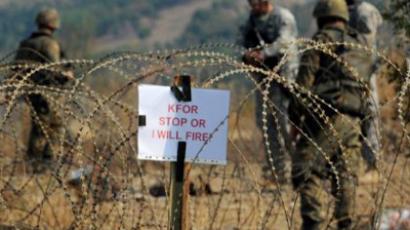
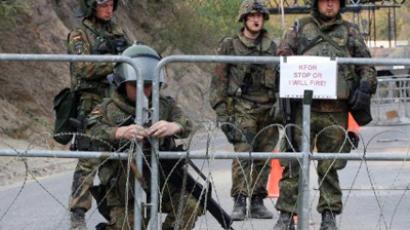
Published 10 Oct, 2011 09:24 | Updated 10 Oct, 2011 18:46The atmosphere in Kosovo has been tense for months, and the international organizations set up to be impartial, clearly seem to be taking sides in the conflict, Serbian First Deputy PM Ivica Dacic told RT.
RT: How do the recent events in the north of Kosovo characterize the plans of Kosovo authorities to reaffirm the so-called independence of the region?Ivica Dacic: The latest events in the north of Serbia show two facts: first, that Pristina is about to set up customs around what they think is the independent state of Kosovo. On the other hand, they show that there are international unions and a whole number of states that approve Pristina’s intentions. We are facing a situation here when international forces deployed in Kosovo in fact serve Pristina’s needs rather than maintain a neutral position. This is why Serbia opposes this attempt to introduce a customs and administrative line on the border with Serbia. Serbia is all for dialogue and for negotiations.I think that Kosovo is only making matters worse by addressing other states. While I have said many times that Serbia is all for a peaceful resolution of the arguments around Kosovo, Serbia also has to take care of its people living in Kosovo. Nobody can expect or demand of Serbia, for any goal – even to join the EU – to state that it is not interested in Serbs or that it has no interests in Kosovo. This is why Serbia demanded a session of the UN Security Council – a demand backed by Russia – but the Security Council was unable to take a decision. It was due to the resistance of Western states who think that the Kosovo case is closed. Kosovo proclaimed its independence unilaterally; those countries agreed with it and now they think there's nothing more to talk about. Well, I think there is. There is still room for negotiation, and all resolutions must be fair.RT:Would a decisive Serbian stance lead to another surge of violence against Serbian population of Kosovo, ultimately increasing the flow of Serbian refugees from Kosovo? ID: Over 200,000 Serbs moved to Serbia from Kosovo, fleeing NATO air raids and the subsequent deployment of NATO and KFOR forces. At the moment, there are some 200,000 Serbs there, and it is crucial for Serbia, it is a key national interest that they stay in Kosovo. Of course, Serbia has its red lines that it will never allow Pristina to cross: for example, to use force against Serbs in Kosovo and Metohija, which would spur a new wave of the conflict and lead to more ethnic cleansing and more refugees. Serbia has made it known to the international community that its patience cannot be tried with attacks against Serbia and the Kosovo Serbs. According the EU Security Council, Serbian police and the Serbian army may not be stationed in Kosovo. On the other hand, Serbs are constantly being oppressed, which may lead to a new wave of ethnic cleansing. Thus, it is very important that peace remains and sincere dialogue continues. We need to find a way out of the situation where on the one hand, there are countries that acknowledge the one-sided proclamation of independence, and on the other hand, there is Serbia, which does not recognize the Pristina initiative. RT: Do you think that the northern part of Kosovo may fall under Serbian jurisdiction? ID: This is a position that I have expressed for a long time: that I support the historical component of the agreement between Serbs and Albanians. We need to fine-tune and confirm administrative borders, which means that if Albanians have the right to say they don’t want to be part of Serbia, then the Serbs have the right to say they don’t want to live within an independent Kosovo. It is obvious that despite the fact that we all want to live in peace as one multi-ethnic civil state, there are great contradictions between the Albanian and Serbian parts of Kosovo. Albanians and Serbs have fought for ages over those lands. This is why the only possible solution is to live in peace and put an end to all problems by either dividing the land in such a way that Serbian parts of Kosovo remain within Serbia, or by putting that part under international governance and removing it from the jurisdiction of Pristina. I think this is the only fast and correct solution. RT:Most NATO and EU countries have recognized Kosovo’s independence. To what extent can the NATO peace-keeping forces and the EU-delegated mission be impartial and objective in a situation like this?ID: It is a delicate and well-justified question. When EULEX was sent to Kosovo, it guaranteed, and the European Union guaranteed as well, that it would be neutral. But the mission’s recent actions have proved that the reality is far from neutral. When the president of EULEX announces the mission’s intention to observe the laws of Kosovo, it testifies to their breaching of their neutrality status obligations. My experience suggests – and I have been in politics for 20 years already – that the partiality of big European states is evident. They are biased and pursue double standards in their politics. Unfortunately, this is the reality we have to face. We have to counter this sad reality or find ways out of the situation. Of course, the plans of Hashim Thaci are actually built around KFOR and EULEX, therefore, if Serbia opposes Thaci, this means it opposes KFOR and EULEX and has to wage war with the rest of the world once again. They are trying to prove that Serbia is opposed to the international community. All in all, I think you were right to say that – it is true that we would like KFOR and EULEX to fulfill their mission in a more neutral and discreet way.RT: What, do you think, the inability of the UN Security Council to pass an adequate resolution on the situation in the north of Kosovo proves?ID: It is obvious that the countries which have the right of veto all support the Albanians, it’s clear, and they won’t let any resolution brought forward by either Serbia or Russia pass. In any case, we don’t want the UN Security Council to take our side – we only want it to be impartial and to further control the work of the international mission, ensure KFOR is neutral and not with the Pristina authorities. All things considered, it is obvious that the Security Council is at a stalemate position – on one hand, it cannot pass resolutions that would distress Pristina, and on the other hand, it cannot decide to grant Kosovo independence because before such a decision is taken, a political solution to the existing problems should be found. They say Serbia’s stance is no longer relevant, it is unimportant – but it is not, if they want a peaceful decision, of course! If the problem of Kosovo is to be dealt with efficiently, the option of an agreement with Serbia has to be considered. As it is now, a new practice is emerging in international politics – any part of a sovereign country is free to proclaim its own independence with no regard to the attitude of the country it is part of. A Pandora’s Box has been opened and it is still unclear how we should put the lid back in place. I think it has to be accomplished by signing an agreement with Serbia.RT:Do you think the EU is in a position to put pressure on Serbia in order to make it recognize Kosovo’s independence?ID: Serbia is interested in joining the EU. This interest lies primarily in the economic sphere. On the other hand, the EU has never told Serbia it has to recognize Kosovo’s independence. And the EU has repeatedly stated it is not going to impose such a decision on Serbia. But some pressure does exist, this is obvious, and it is exercised where minor issues are concerned – all this is likely to evolve into a direct recognition of Kosovo’s independence in the long run. This is the issue of customs control and the elimination of Serbian institutions in the north of Kosovo. And if Serbia agrees to do it, it will be virtually an act of recognition of Kosovo’s independence. I believe, it is clear that Serbia will never sacrifice its national interests for the sake of admission to the EU. Serbia may hold talks with the EU on a range of issues, like other states – on trade quotas, political system, justice and combating crime, fishing issues Norway has been discussing with the EU. But these talks cannot be focused on a part of Serbian territory. RT:One of the preconditions of Serbia’s accession to the EU was the arrest and extradition of General Ratko Mladic to The Hague Tribunal. What does Serbia think of the legal proceedings? How is the trial going? Is Serbia satisfied with it?ID: I think the EU has already forgotten about The Hague Tribunal, and the conditions it set for Serbia: that it should detain Mladic to enter the Union, and now Kosovo has become a central issue. A ground to put pressure on Serbia can always be found. Serbia has handed 46 people over to The Hague Tribunal, and all were convicted by it. We think the Tribunal has based its every decision on the assumption that all Serbs are to blame for the problems of ex-Yugoslavia. In most trials that have taken place lately, Serbs were in the dock. It was necessary that my country found Mladic, this is true, but it is also necessary that we prove his innocence in court. This should be done in the best interest of the state, because such cases have started to cast a shadow over the reputation of the country. Everyone who committed military crimes should be held responsible, but this responsibility cannot be collective, it cannot be assumed by a whole nation, a whole country. We have the example of Croatia, where national heroes, generals of the Croatian army were convicted. And you see that Albanians are seldom among those who have to face punishment for the military crimes they committed against the Serbian population. The Hague Tribunal did not want to hear cases of organ trafficking involving Albanians who abused Serbs. It’s time to ask the question: what global picture was The Hague Tribunal striving to draw of itself and other states of the world? The Tribunal is perceived as highly partial and discriminatory in Serbia, at least by common citizens. But despite all this, Serbia has met the commitments it made.RT: And the last question, Mr. Minister: Kosovo has been a de facto independent state for three years already. Let’s be realistic: how strong is the possibility that it comes back to become part of Serbia once again?ID: We should be realists if we want to engage in serious politics – we should foresee all possible developments. Today, we have several options: the first, or Pristina, option – Kosovo is independent and has no further interest in Serbia whatsoever; the second, Serbian, option is stipulated by the Serbian Constitution – Kosovo is part of Serbia. We expect Kosovo to come back and let us take it under our wing. Neither the first, nor the second option is realistic, a compromise should be found. I think, when searching for a compromise, we must consider defining the status of Serbs living in the north of Kosovo as well as their monasteries, and try to regulate the relations between the Albanian and the Serbian people in general. I think this is the best and quickest way to resolve the problem.