Silent spring: Press gagged over Iraqi protests
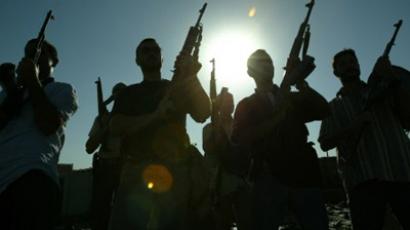
Published 7 Jan, 2012 06:43 | Updated 7 Jan, 2012 10:43Iraq’s decade of conflict was meant to herald a move to democracy.But freedom of speech appears a long way off in a country where journalists say they are routinely imprisoned, beaten or simply killed by the forces of the state.
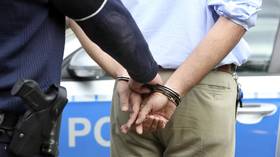
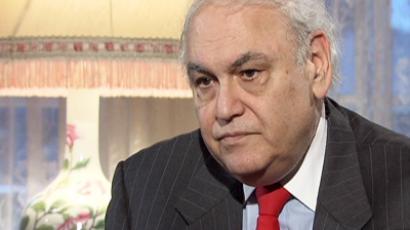
This spring Iraqis, inspired by their neighbours in other Arab countries, began protesting against their government. They gathered in a square in Baghdad which shares its name with Cairo’s iconic counterpart – Tahrir.But Iraqi journalists trying to cover the protests were all but silenced by government security forces.Since the last American troops left Iraq, the country has had to face the task of managing its own affairs, but the consequences are proving fatal for some. Joe Stork, a Deputy Director of Human Rights Watch's Middle East and North Africa Division, says journalists are an “endangered species” in today’s Iraq. “There seems to be a high level of intolerance for dissent, or for public criticism of either government policies, or of particular leaders,” he said.Yousif Al-Timimi, a freelance journalist, showed RT some shocking YouTube footage from the protests this February that explicitly shows Iraqi security forces targeting him because he is a journalist. He shouts “Sahafa” which is Arabic for journalist over and over again, but it only makes the police more violent.“Three or four or five riot police were around me. One of them slapped me in the head. Another one kicked me in the butt, and they kinda grabbed me fast,” Al-Timimi told RT.Yousif managed to escape arrest thanks to two foreign journalists who intervened, but since the arrest of one of his colleagues, he has stopped covering the protests altogether. “It became hard for journalists to go to Tahrir Square. I myself, I don’t go there. I stopped going there a long time ago, not because… I’m scared. I’m worried to be arrested. I’m worried to be mistreated,” he says.RT tried to speak to some of the journalists who had been arrested in Baghdad, but they were all too afraid to appear on camera. So the crew headed to the more peaceful Kurdish region to see if the situation was any better.RT’s Sebastian Meyer met Ahmen, a young photographer who was arrested while covering similar protests in the Kurdish region. But after the interview he called Sebastian to tell him he was scared of reprisals from the government and asked to blur his face and change his name. After his arrest in April, Ahmed was imprisoned for four days and tortured.“Then six men came to the room and started to shout at me and beat me with cables. Then they electrocuted me. They wanted me to admit that I hadn’t been at the protests,” Ahmed told RT. When he was finally released after four days, a friend took pictures of his wounds and published them in a local magazine. Immediately, Ahmed was re-arrested as a punishment for publicizing his arrest.Back in Baghdad, government spokesman Ali Dabbagh admitted to RT that individuals in the Iraqi government were indeed using their powers to silence the press.“This is not protected by the government. The government is against anything and you can see that there are people in the Ministry of the Interior, for example, they are misusing their power against citizens and against journalists. They keep accounts and some of them have been fired,” he said.Almost nine years after the invasion, US troops have left Iraq, but what of the country they have left behind? With politicians using the security forces to silence journalists, it appears that Iraq lacks any credible press freedom, a freedom that is essential to any democratic country.