VERSIONS: روسيا اليوم NOTICIAS FREEVIDEO ИНОТВ RTД
breakingnews
Go to main page   News   ‘Hurt Iran, and don’t stop hurting Russia’  
MORE ON THE STORY
HMS Argyll 24.01, 16:21 140 comments

'Clear signal' to Iran: UK warns of more firepower in Hormuz

Britain could send reinforcements to defend the sensitive Strait of Hormuz against a possible blockade by Iran.

Iran tension
Oil-for-gold: Tehran’s metal shield from sanctions 24.01, 12:53 139 comments

Sanctions dodge: India to pay gold for Iran oil, China may follow

India has reportedly agreed to pay Tehran in gold for the oil it buys, in a move aimed at protecting Delhi from US-sanctions targeting countries who trade with Iran. China, another buyer of Iranian oil, may follow Delhi’s lead.

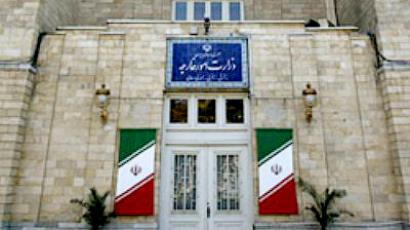
Iran’s Foreign Ministry building 23.01, 23:49 27 comments

Iran: EU oil embargo doomed to fail

The EU’s embargo on Iranian oil is “doomed to fail,” Tehran said after the crucial decision was taken. Iranian media outlets are sure the Persian country will not run out of customers - and suggest cutting off oil supplies to Europe before July.

Iran tension

‘Hurt Iran, and don’t stop hurting Russia’
Published: 25 January, 2012, 14:13
Edited: 26 January, 2012, 09:19

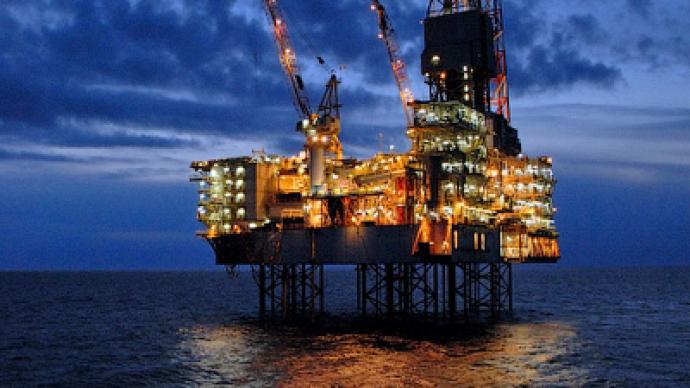
Photo from www.bp.com

Photo from www.bp.com

TRENDS: Iran tension

TAGS: Conflict, Politics, Central Asia, Iran, Gas


Blasting Iran with new sanctions won’t stop the west from working with Iranian energy companies if the stakes are high enough, it seems. UK lobbyists have ensured that BP and others can continue a multibillion dollar gas project vying with Russia.

­A political balancing act was needed to protect investment into Azerbaijan’s Shah Deniz natural gas field, where BP works with Iran. The second stage of this project operated by British Petroleum worth $20 billion is meant to decrease Europeans’ dependence on Russian fuel, reports the Wall Street Journal.

"There is broad-based consensus in the House and Senate that our sanctions policy should impose maximum economic pain on the Iranians without allowing Russia to hold Eastern Europe hostage for energy supplies," the newspaper cites a congressional aide familiar with the European lobbying effort as saying.

The Shah Deniz II in the Caspian Sea is an international project operated by British Petroleum, which holds a 25.5 percent stake. Among other participants is the Iranian state-owned oil company Naftiran Intertrade, with a 10 percent stake. Washington’s sanction effort against the Iranian oil and gas industry could have blocked the project, but a lobby effort seems to have ensured an exception.

A bill currently with the US Senate's committee on foreign affairs would ban any company dealing with the Iranian energy sector from doing business in the US. The current wording however says it will not affect efforts "to bring gas from Azerbaijan to Europe and Turkey," or to achieve "energy security and independence from Russia."

European officials say they are closely monitoring the legislation’s progress, as well as other congressional proposals which could affect Shah Deniz II.

The UK supports a policy that "balances the desire to put pressure on Iran over its nuclear program and makes sure it does not have an adverse impact on European economies," said a British Foreign Office spokesman, who confirmed to WSJ the lobbying on behalf of BP.

American and European governments are putting pressure on Iran over its controversial nuclear program. In the latest round of action, the US and EU have targeted the Islamic Republic’s oil export through an embargo and sanctions against financial institutions involved in such trade. Iran, while hurt by the sanctions, has refused to review its nuclear policies.

Natural gas from the Shah Deniz field was pumped from Azerbaijan to Turkey through Georgia in 2006. The project became fully operational the following year. The second stage consists of an additional offshore gas platform, sub-sea wells and expansion to the gas plant processing the fuel.

In addition to BP and Naftiran Intertrade, the project includes Norwegian Statoil, the Azerbaijani State Oil Company, France's Total, Turkish Petroleum and joint Russian-Italian venture LukAgip, which is owned by LukOil and ENI.

Russia is the largest supplier of natural gas to Europe, with Eastern European countries particularly dependent. The EU wants to decrease dependence on Russian gas through diversifying sources. Russia has been successful so far in maintaining its market share by contracting most of the gas produced in the energy rich Central Asian countries, leaving competing pipeline projects with little gas to pump.


+10 (25 votes)
 
Back to top
next MORE NEWS
Mikhail Prokhorov (Photo from mdp2012.ru) 25.01, 13:55 1 comment

Putin challenger: I’m ready for a fight

Presidential hopeful Mikhail Prokhorov shared with RT his hopes for being elected into Russia’s highest office, and what he has in store for the country, should he win.

Election 2012
Officials check the area after a Lunar New Year celebration in central Thailand, Suphan Buri province January 25, 2012 (Reuters / Sukree Sukplang) 25.01, 14:54 5 comments

Thai Year of Dragon celebration ends in fiery tragedy (VIDEO)

A Chinese New Year celebration in Thailand turned into a tragedy as festive fireworks sparked a blaze. Four people died and almost 90 were injured, while more than 100 homes burnt down.

John Ellis January 26, 2012, 08:49
+14

“The curse causeless has not come.”

And the curse that has always plagued society, is a failure to organize against the greatest common enemy of society. And in this global War On Terror, surely Empire USA is the greatest terror we should all fear.

Tsar Kolokol January 26, 2012, 05:37
+7

@Expatriate

We have to DO something about ; I'm analysing text from citizen
Putin ,and it is promising .

Of course he isn't the only one !

Let's unite ,and work on it together .

Thank you for the reply

Everything has a reason! January 26, 2012, 04:47
+7

Valmach1 wrote in #13

Whine! Whine! .. Russia does as much dirt to its own people - have any of you ever been to Iran? . well if you had you would know that 90% of the Iranian people despise their current regime.. but have no way to speak out .. for fear of being murdered by their own police.. Oh Wait... same problem for Russians.. This is politics.. this is the world .. get used to it..

While I agree that there are different levels of sensitivity to opposing views throughout the world it never ceases to amaze me that some are so readily able to find statistical numbers like “90% of Iranians...”. Having talked extensively with many who have recently travelled to Iran, not only I am unable to compile such numbers but I have been surprised about their new waves of post-revolution awakening since US sanctions. Most Iranians appear to have developed a unified perspective against Western hypocrisy in democracy. They are seeing the US as the culprit of all their ills. They concede that they have problems like any other country but unlike Americans they try to solve them through education and getting into government to cause constructive change. Iranian government, in turn, does not appear to be averse to constructive change but is quite sensitive in detecting calls for change as a disguise for destructive changes like regime changes for few, spread of narcotics as freedom, increase in divorces and broken families for fulfilment of lust, …. As for why there are different levels of sensitivity to opposing views? The answer is mainly in differences of financial capabilities that restrict governments in providing safe social frameworks for the broadest range of freedoms. All countries are struggling with this reason. Just as the US government has severely curtailed its democratic rights and public freedoms during the last decade of its financial downturn. Although the US is one country that continues to deceptively finance its requirements through printing fiat money without any backlash. Other countries are under more scrutiny and have not learned how to dope public to this date. If Iran and Russia had the same cards as the US to play with we would have seen much more freedom and democracy in Iran and Russia than in the US today.