Interview with Viktor Danilov-Danilyan
Published 31 May, 2007 04:45 | Updated 31 May, 2007 08:45
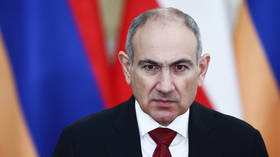
Viktor Danilov-Danilyan, the Director of the Institute of Water Problems, spoke to Russia Today about climate changes and the problems which could follow them.
Russia Today: Do you think that these record temperatures we are seeing at the moment are in fact down to climate change or it is just a spike that happens, say, every hundred years or so?
Viktor Danilov-Danilyan: Well, I think nowadays nobody doubts that the climate it changing. But the climate changes could be much more drastic that some people might expect. I could only say that the average near surface temperature on a global scale is changing at least 300 times faster than it was in any other era known to paleoclimatology. But it is not only the average near surface temperature that is linked with the global warming; there are other essential processes as well. What is really going on with the climate could be called deregulation of the world climate system. It is accompanied by all kinds of climate anomalies becoming more frequent and strong. By these I mean both up and down spikes of temperature, hurricanes becoming more frequent and violate as well as floods and droughts. All these are different aspects of the same process. The climate system, once put out of the state of balance, which has lasted for a considerable time, is searching for a new balance. And I want to stress that as long as the system is in search, not a single country in the world would obtain any kind of advantage over the others. Everybody would suffer.
RT: You actually concur with many of the scientists that say this is a very severe problem. Some scientists say that climate change and global warming are not that serious and that people worry too much about them. And do you say it is really a severe problem?
V.D.-D.: Yes, I am sure it is dangerous. The matter is that the key point of the issue is the speed of the ongoing changes. All the changes happening on Earth deal with systems of life forms or biotas, as biologists call them, in one way or another. Every system of this kind has a limited adaptation potential. It could adjust itself to relatively slow changes. But what is happening now, most possibly, has never happened before. It is enough to mention dinosaurs, which are most often referred to, were dying out for 1,000,000 years. What we witness today are absolutely radical changes. And the process of adaptation of any biota, of any type of life forms inhabiting forests, soil, water etc. is going to be tragic. For example, forest fires will grow more frequent and fierce, simply because of the fact the hydro conditions will change practically in all forest-covered areas. Draughts will also get more frequent. New forests which are better adapted, which are being formed in every given area, will be occupying this area during several hundred years. These forests will not be able to get there at once. This long, a hundred-years-long pause, is in fact the process of re-organisation.
RT: You are painting a frightening picture. Can you tell about the organisation you work for, the Institute of Water Problems? How are you concerned with this problem?
V.D.-D.: Our Institute focuses on water bodies on land, these are rivers, lakes, reservoirs, underground water, swamps, on the interconnection of all these systems and naturally on the expected reaction of these water bodies to climate changes. This is one of the themes of our research. About half of the Institute staff in one way or another deals with ecology issues connected with water bodies, either directly linked to water ecosystems or riverside, the so-called ecotone systems which strongly depend on water bodies.
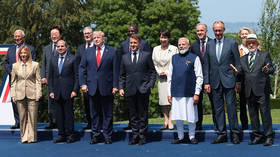
RT: Speaking about the G8 summit that is coming up in Germany, what would you be telling the world leaders, how serious, do you think, this problem is and what should they be doing?
V.D.-D.: It has been quite clear for a long time what should be done to this problem. It is necessary to decrease human activity influence on the environment. But this decrease should be carried out in different directions. First of all, this is the decrease of greenhouse gases emissions, but this is not the only thing to be done. It is important to stop destroying natural ecosystems in cases it is possible for the humanity to do so. People should preserve nature that still exists. And the areas which used to be forest-covered in the past but are now not used by people should be by all means re-cultivated.