Growing web poses question of regulation
The Worldwide Web – all knowing, all conquering. It crosses borders and breaks down barriers. But can something that we have allowed to become so vast ever be properly managed?
The Internet has become a vital tool for its nearly two billion users. Currently, it is the United States that is tasked with attempting to regulate the web. But the United Nation’s International Telecommunications Union (ITU) thinks that they could do a better job. At its conference earlier this month in Mexico, its members announced that proper management of the Internet requires global co-operation.
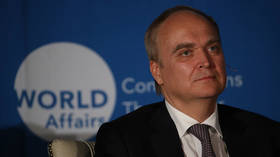
Russia’s representative, Communications Minister Igor Shchegolev, agrees.
“We have a very good dialogue with America. But we believe the threats now facing the web are too big and necessitate an international response. Only once countries are united can they effectively tackle terrorist, extremist and child pornography networks,” he says.
But the complex debate playing out on the other side of the Atlantic will probably not be playing on the minds of average web users, like the regular visitors of numerous Internet cafes in the Russian capital.
Internet cafes are springing up all over the city at an increasing rate. And that is because they are feeding a growing demand. There, Muscovites of all ages and backgrounds can get together socially, either to just surf the net, or to compete against each other playing the very latest interactive computer games.
And that is largely thanks to Russia’s burgeoning telecommunications industry, bringing high-speed wireless networks to the masses – with Russia’s new wave of scarily technologically savvy “tweeters” and “bloggers” paving the way.
Complete with state-of-the art Mac laptops, classes in Moscow school No. 1367 look like an Internet cafe. But they are not. For 13-year-old Aleksandr Kobzev and his classmates, keypad and mouse are now as much a part of learning as the textbook and pen. And studying like this is actually fun.
“It’s more interesting with computers, even if you have to do boring research or cram facts,” Aleksandr says. “Without it you’re only told things, but with a computer you're shown things.”
For these students and teachers, IT features in almost every subject lesson and every aspect of the school’s functioning. Skype and online messaging have replaced the noticeboard, overhead Tannoy and school report cards.
But its headmaster Andrey Pashkov insists that all this is used alongside more traditional means of educating. He also says his school is not a rarity in Russia.
“I think it’s part of a growing trend,” he believes. “But what’s important is to use this technology properly to enhance the learning process. I think computers in schools will become more widespread, but it is crucial to understand that no computer could ever substitute for a teacher.”
And as the question of who should regulate our use of the Internet rumbles on, its reach – and our dependence on it – continues to grow.