VERSIONS: روسيا اليوم NOTICIAS FREEVIDEO ИНОТВ RTД
breakingnews
Go to main page   News   Right reaction? Cold spell forces Germany to switch back to nuclear reactors  
MORE ON THE STORY
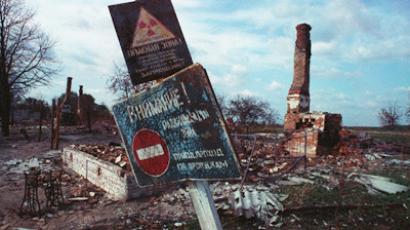
Chernobyl ruins (Photo by Igor Kostin) 16.03.2011, 09:04 2 comments

World considers nuclear-free future

The Japanese disasters have raised questions as to whether nuclear technology can ever be called safe to use. EU nuclear experts are considering if the union should eventually move away from nuclear energy.

Earthquake in Japan Fukushima nuclear disaster
No German nuclear power means higher bills for all EU countries (AFP Photo / Odd Anersen) 02.06.2011, 08:30 8 comments

No German nuclear power means higher bills for all EU countries

The shockwaves from Japan's Fukushima nuclear plant disaster have reverberated loudly in Germany. To such an extent that, despite the fact that atomic energy provides nearly a quarter of the nation’s electricity, the plug is set to be pulled.

A Homeless man stands outside one of the opened shelters in the industrial Ukrainian city of Donetsk on February 2, 2012 (AFP Photo / Alexander Khudoteply) 03.02, 19:15 18 comments

Deadly freeze: Hundreds dead in Ukraine, Russia and Eastern Europe

The wave of frost that has rolled over Eastern Europe has carried away hundreds of lives, paralyzed road traffic, and pushed the cost of heating homes and offices sky-high.

Right reaction? Cold spell forces Germany to switch back to nuclear reactors
Published: 09 February, 2012, 21:05
Edited: 10 February, 2012, 09:22

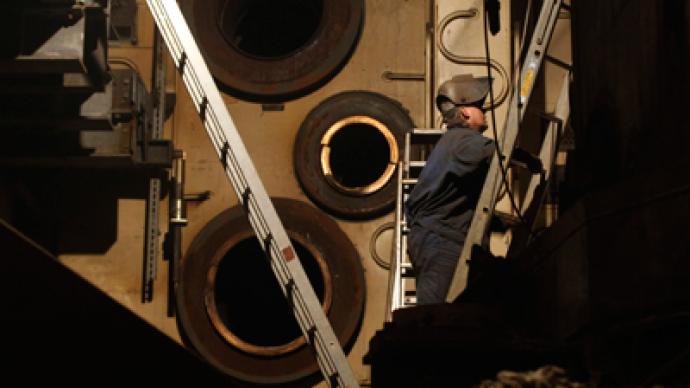
A man works at the reactor core of a former nuclear power station in Kalkar (Reuters / Ina Fassbender)

A man works at the reactor core of a former nuclear power station in Kalkar (Reuters / Ina Fassbender)

TAGS: Nuclear, Crisis, Europe, Weather


When a country declares its abandoning nuclear power, you don’t expect it to backtrack just one year later. But that is exactly what Germany is doing – because it’s gotten too cold for principles.

­The cold-related surge in electricity demand has prompted Germany's network operators to call upon nuclear power plants left in reserve as a "preventative measure."

The move came after Europe was hit by an unusually cold weather front, with temperatures on the continent dropping to well below zero. 

Originally, the decision to freeze out nuclear power came in March 2011, after the devastating earthquake and tsunami in Japan, which led to nuclear waste leakage from the Fukushima plant. Eight of the country’s 17 reactors were switched off immediately, with the remaining ones scheduled to be taken offline by the year 2020. 

Last year, Germany was forced to import electricity from neighboring Austria to help supply winter demand, but this year’s freak cold weather meant relying on your neighbors was no longer an option


+1 (5 votes)
 
Back to top
next MORE NEWS
Iranian security forces inspect the site where a magnetic bomb attached to a car by a motorcyclist exploded outside a university in Tehran on January 11, 2012 (AFP Photo / IIPA / Sajad Safari) 09.02, 19:41 47 comments

Mossad hit-squads behind Iran scientists' murders - US official

Israel’s Mossad trained and financed a terrorist group that carried out a series of Hollywood-style assassinations of Iranian nuclear scientists, unnamed US officials have revealed. Iran, however, believes the CIA was also sponsoring the killings.

Iran tension
Greek Public Power Corporation unionists protest as a banner reads "we resist" in Athens on February 9, 2012 (AFP Photo / Angelos Tzortzinis) 09.02, 23:12 6 comments

Bailout doubt: Greece agrees spending cuts amid Euroworries

Greek lawmakers have agreed a last-ditch deal on the new spending cuts required to save the country from default. However, Germany is insisting the agreement does "not yet fulfil all the conditions" and thus cannot be signed.

AnAmerican February 13, 2012, 19:06
0

I was just going to suggest exactly what George said. Our governments pretend like electricity is some hot commodity, when in actuality the availability of global abundance of electricity is already there and being implemented in countries like China. We could in effect fuel the entire world, everything that uses electricty or energy, off a Thorium reactor. Cadillac introduced the "WTF" a year or 2 ago which was a car designed to run on thorium, however an engine is not ready to be mass produced for vehicles. (Research and development is underway) 

Imagine a rock the size of a marble producing an energy equivalent of 7,500 gallons of gas. 

pikachu February 10, 2012, 05:17
+1

This is utter nonsense. As someone else pointed out already those power plants aren't NPPs and the reason reason why they are reactivated is because of the cold winter and the wide spread of electrical heaters in france which results in all time high demand, which the frensh NPPs can't keep up with. The german power plants are reactivated to stabilize the power grid that is destabalized by france, selling electricity to france is very profitable right now.

George February 10, 2012, 04:15
+11

Germany could use LFTRs. Liquid Fluoride Thorium Reactors (LFTR) have inherent safety, including:

- coolant remains liquid far above the reactor temperature (700-1000 degC vs 1400 degC); reactor operates at atmospheric pressure, no high pressure to explode, loss of coolant accidents are not possible. The coolant is chemically stable (unlike water or sodium cooled reactors), doesn't react with air or water.

- The coolant is strongly chemically bonded to the fuel. It cools to a glass-like solid, won't stay in the air, won't dissolve in water, won't travel far in water.

- Chance of radiation leakage in any accident is greatly reduced, compared to solid fueled reactors, since fuel is 1/250 of a solid fueled reactor. (A conventional reactor starts with 250,000 kg natural uranium per giga-watt-year, extracts a rare isotope, and only fissions about 1% of that before the fuel rod has to be replaced. Molten salt reactor would use 800 kg of fuel (any isotope of uranium or plutonium (from nuclear waste, weapons, or converting thorium to uranium in the reactor), circulates the molten fuel for 99%+ fissioning, and has very low waste: 83% of 800kg completely safe in 10 years; remaining 135 kg (300 lbs) completely safe in 350 years. Compare to PWR or LWR: 250,000kg for thousands to millions of years.

- Rate of fission slows as molten fuel expands from heat, increases as the molten fuel cools, very stable operation.

LFTRs also passive safety, including:

- Allow a frozen salt plug to melt, and fuel drains quickly to passive cooling tanks where nuclear reaction is impossible

- Fuel can be passively cooled with no water and no power, simple heat radiators, with radioactive materials completely contained.

My blog covers design, safety, nuclear waste, economics, development and testing to be done, proliferation, how LFTRs would fare in accidents or attacks, http://liquidfluoridethoriumreactor.glerner.com/