VERSIONS: روسيا اليوم NOTICIAS FREEVIDEO ИНОТВ RTД
breakingnews
Go to main page   News   Free education fails to close India’s social divide  
MORE ON THE STORY
US jobs flow eastwards 28.07.2011, 09:43 6 comments

US jobs flow eastwards

With money in short supply for companies in the West, they are taking their operations and dollars to the cheaper East. India’s economy is among those benefiting from the American financial downturn.

Indians are working harder and longer than their Western counterparts. 16.07.2011, 09:00 6 comments

Outworking the West: India takes its own way

Indians know all too well - if you want the best in life, you have to put the hours in. And so they are reaping the benefits by working harder and longer than their Western counterparts.

Cheap pesticide defends crops but attacks humans (image from theangle.org) 24.06.2011, 09:05 1 comment

India’s new generation pays price for cheap pesticide

Cheap, effective and highly toxic Endosulfan pesticide is banned in most countries, but still widely embraced by farmers in India. While the government claims there is no affordable alternative to the chemical, families are paying a high price.

Adopted kid 26.07.2011, 20:28 1 comment

Foster parents to pay child support for abandoned kids

Under a new agreement signed by Russia and the US, American foster parents who abandon an adopted Russian minor will have to pay child support.

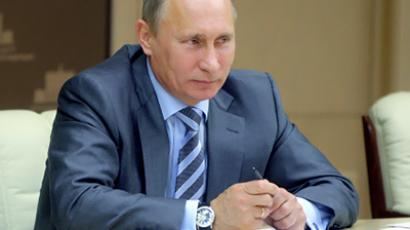
Vladimir Putin (RIA Novosti / Aleksey Druzhinin) 14.07.2011, 16:11 1 comment

Putin wants innovative education standards

Prime Minister Vladimir Putin believes that new educational standards should be worked out to close the gap between university and “the real world” that currently exists in Russia.

Free education fails to close India’s social divide

Published: 30 July, 2011, 10:07
Edited: 30 July, 2011, 21:28

Scence from the movie Slumdog Millionaire

(30.5Mb) embed video

TAGS: Children, Politics, Human rights, Law, India, Modernization, Cary Johnston, Priya Sridhar


More than a year has passed since the Indian government announced the unprecedented Right to Education Act, aimed at stamping out illiteracy and narrowing the country's socio-economic divide. However, the reform is facing tough challenges.

After growing pressure to address the educational disparities in India, the government passed an act making it mandatory for all children between the ages of six and 14 to get a free education. It even requires elite private schools with tuition fees nearing 500 dollars per month to grant a quarter of their places to students from disadvantaged backgrounds.

“We are a nation of young people. The health and education and creative abilities of our children and young people will determine the value and strength of our nation,” says Indian Prime Minister Manmohan Singh.

Today, there are just as many schools where students pay tuition as there are government-funded schools that are free to all. The act would allow parents to choose where they wanted to send their children to school. It would mean that students could attend elite private schools if they were lucky enough to become one of the 25 percent quota to win the ’free entrance’ lottery. It would also mean that, if social workers were able to identify and successfully enrol most children, low-budget schools with minimal tuition fees could get extremely crowded.

But the idea of free schooling in India has its opponents, with concerns being raised even by proponents of the act.

“Free schools have not resulted in quality, and I think poor parents are much smarter than that. They know quality and they want quality,” Sujatha Muthayya of the School Choice Campaign told RT.

And quality is something that the principal of one such school, Vikas Jain, knows has a different definition depending on the school. While he wants to see his students succeed, he believes that integrating Indian children from a lower class into a private school would not be practical.

“These elite schools have a very high standard. Only children whose parents are educated can study in school like these,” he explains. “Schools want to maintain their high standards and reputation. How can poor people send their children to schools like these? Because their parents are uneducated, there is no-one at home to tutor or supervise their studies or homework.”

It is a position supported by the well-off members of Indian society, as RT found out talking to people on the streets of New Delhi:

“Schools are not meant for them. They’re meant for higher-class people. Lower-class people, if they go there, they’ll get neglected,” said one passer-by.

“In a sense that he comes from a rural background, and his parents are probably labourers or whatever they are, putting him in that sort of environment – he would have trouble getting assimilated,” said another.

In spite of the mixed reception the integration model has received, for children from poor families, education remains one of the few ways to realise their dreams – dreams that may just fall through the gap of India’s socio-economic divide.


0 (0 votes)
 
Back to top
next MORE NEWS
There are many ways to cut deficit but elite won't listen 30.07.2011, 08:59 10 comments

Elite won’t trade off revenues to save America from default - Celente

While the politicians battle it out over who would be to blame if the American economy hit a brick wall, Gerald Celente from the US-based Trends Journal says the political elite will not recognize simple solutions to curb America's deficit.

US public relations firms booming with press presence going down 30.07.2011, 10:42 4 comments

Evanescent journalism gives way to PR spin doctors

Recent polls show the number of journalism roles in the US is shrinking, in direct contrast to the expanding public relations industry. As newspapers across the country close, professional journalists are being picked up by the PR machine.

Sarah Goodwill July 31, 2011, 03:43
0

oh no, they'll play the learning disabled game at first then they'll be like us and say that only stupid people are poor, so they'll suddenly become stupid.  Don't even bother trying to make people equal.  Focus on stability.

Nay Lin Maung July 31, 2011, 03:36
-1

I am still remembered when I attended high school in Myanmar.


The people who live in the Lanmadaw township and Latha township and have to attend the school of their township that opens for students to learn.


Some reasons, our school head master lets some students from out of the township likesYankin township and Insein township to attend our high school.


Nay Lin Maung July 31, 2011, 03:24
0

Government has to let some of children who lives out of the area to attend elite schools.