European backlash over multiculturalism
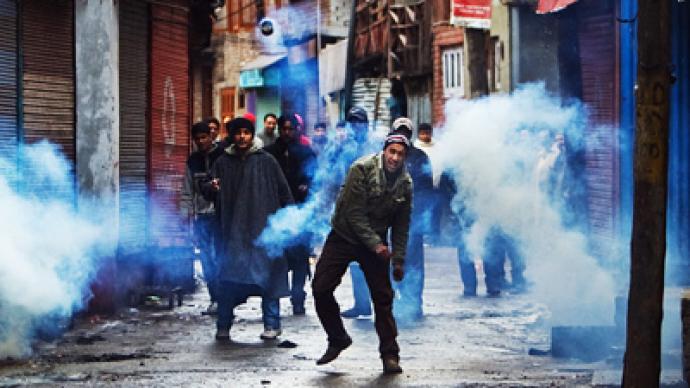
European leaders are one by one denouncing the policy of multiculturalism. The latest “fail” stamp came from French President Nicolas Sarkozy, who said he does not want people to pray in an “ostentatious way” in the street.
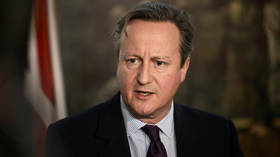
As popular unrest stirs up Northern Africa, there are fears of a fresh wave of immigrants flocking to the EU and the Old World is not waiting for them with open arms. The concept of multiculturalism seems to be failing all around Europe.The one who started the trend was German Chancellor Angela Merkel. “This approach has failed, utterly,” she said.Then British Prime Minister David Cameron weighed in, saying, “We failed to provide a vision of society to which they feel they want to belong.”And now France’s President Nicolas Sarkozy has made an admission, as well. “My answer is, clearly, yes, it's a failure.”The heads of state have only now realized what many observers and radicals have been saying for quite some time.“Multiculturalism will only function if people coming to the country will have a job, have their own money and feel responsible for the community,” says immigration officer Arnold Mengelkoch from Copenhagen. “Otherwise, they are jobless people who lead a passive life with social welfare.”And the passive approach can sometimes evolve into extreme action.Denmark is home to more than half a million immigrants, making up 10 per cent of the population.Take Odense, a quiet Danish town, known as the birthplace of Hans Christian Andersen, one of the world’s best-known fairytale authors. But the story unfolding here has nothing magical about it.Clashes between Danes and groups of Somali and Palestinian youths have rattled this neighborhood for more than a year. Locals say car burnings and violence between immigrants and police are a familiar sight.This Danish neighborhood tries to sustain a collision of two different worlds. And voices are being raised about doing something before the situation gets out of hand.There have been some suggestions on how to ease the tensions.“If we take those 200 people and split them all over the city with the help from the state and police, and kick them out of the country, we won’t have any problems,” says Odense City Council member Alex Ahrendtsen.But some immigrants believe the main issue is in the definition of integration.Gassan Khorani, a Danish immigrant and civil engineer, says immigrants and natives just perceive the idea of integration differently.“The Danes think that integration means becoming fully Danish. Immigrants have to eat, drink and live just like the Danes. But those who come here think integration means earning some money, having their kids speak Danish and going to Danish schools. That’s why there’s a discord,” he says.Perhaps until this difference in expectations is resolved, the cultural tensions in Europe will persist. But admitting that the problem exists may be the first step on the way to finding a solution.Speaking about who to blame for this failure, Brian Cattell, from UK think-tank the Bow Group, says he thinks that “both sides” – the government and immigrant communities – are guilty. He says there is always a risk that Western leaders' remarks slamming Muslims for failing to integrate could cause a backlash and further divide society, but “the risk of not doing anything is greater." “The comments which were made by David Cameron and some other European leaders have predictably provoked some criticism from various groups, but I think the question you need to ask yourself is what the risk of not doing anything is – of leaving the status quo – and I think the reason these politician have come out so firmly with a view which, probably a couple of years ago, would have been considered a taboo…. I think the reason they have done that is that they think that the risk of not doing anything is greater, because we run the risk of the Europe in which people of the Muslim faith, perhaps some other groups feel separate, they do not feel happy, the part of that Europe. And that can lead to feelings of extremism and in very rare cases, but tragic cases, people are turning to terrorism,” Cattell says.
Member of the European Parliament and the EU parliament's vice-chair of foreign affairs, Fiorello Provera, says Italy faces the same multicultural problem because most of the immigrants do not want to live by the country’s rules. Multicultural tolerance, he says, means that all people have to live following the same rules and laws. “Immigrants [in Italy] are tolerated if they follow rules, laws and traditions. It is very easy to tolerate, to accept immigrants following the rules. If they want to live their own rules on our territory, it will be very difficult to accept for the Italian people.”
Failure of multiculturalism is the fault of the European governments not standing up to reality, believes Danish writer and columnist Mikael Jalving. “You can’t blame a whole group of people for not doing this or that, but you can blame the politicians for not dealing with the problems, not turning them into subjects that can be criticized and debated, which is exactly what they are trying to do now,” Jalving told RT.