Egypt one year on: State of emergency cracking up
Egypt's military rulers are partially lifting the country's decades-long state of emergency – a key demand of protesters who today mark one year since the uprising that toppled President Mubarak.
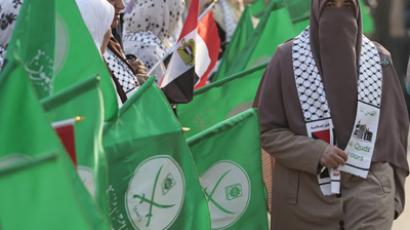
Protesters have returned to Tahrir Square in their thousands to mark the first anniversary of the uprisings that led to the ousting of President Hosni Mubarak.At least 122 people were injured during the rally at Tahrir Square after one of the stages collapsed. Some 29 people were taken to hospital with injuries and fractures. All the others were treated for minor injuries at the scene.Even though the crowds are melting away into the night, the rally was even bigger than the protests on January 28 last year, when the Egyptian revolution began, says RT correspondent Anissa Naouai.During the day thousands of people were unable to make their way to the square, not least because of the tents which had been set up once again by the most hardened protesters. They say that this time they will stay at the square until the military lets go of power, Anissa Naouai reported.There is much debate whether the rally is celebrating the changes heralded by the uprising or if people are calling for further reform in the country. The protesters are a melting pot of liberals, leftists and staunch Islamists waving banners and chanting slogans that convey a wide range of conflicting messages.
State of emergency half-measure falls short
Mohamed Hussein Tantawi of the ruling Supreme Council of the Armed Forces (SCAF) announced the emergency law will still be used by police in crimes related to so-called "thuggery", mass rioting and robbery. Egypt has been under a state of emergency since 1981, when Islamist fundamentalists assassinated President Anwar Sadat. The law handed authority to the army and police and was abused with impunity for thirty years.The SCAF widened the scope of the law last year, banning labor strikes and demonstrations, adding to the many grievances the council’s opponents hold against them. The ‘lifting’ is being taken with a grain of salt by critics, since it allows the security forces retain their grip on the country.Latest report says 699 people were killed and 3,551 were wounded during the revolution that overthrew Mubarak. Many of the tents set up in Tahrir square are black, in memory of the victims.Yet a year on, the country has a new lower chamber of parliament dominated by the moderate Islamist Muslim Brotherhood, banned under Mubarak, and more radical Salafi MPs. Its first session on Monday discussed a possible public execution of Mubarak and stripping the SCAF of power. Unemployment in Egypt is at a ten-year-high, as the tourism industry hemorrhages business scared off the country’s beaches by the ongoing turmoil. Resentment among the population is obvious. Demonstrations are a regular sight in Cairo and elsewhere, reports RT’s Maria Finoshina. Protesters blame SCAF generals, who served Mubarak when he was in power, for hijacking the revolution, as well as for a series of bloody crackdowns on demonstrators during the year.The military maintain that they will step down after a new president is elected in June, but protesters are unconvinced. They say the generals, who maintained an important position in Egypt’s life for at least six decades, will maintain control from behind the scenes.
‘The barrier of fear has been broken’
The partial lifting of the emergency law shows that the military council is, to a certain degree, responding to the mounting pressure from the revolutionaries, believes Lina Attallah, managing editor of the Egypt Independent newspaper. But she says there is still “a lot of skepticism about this move.”“However, many received the news of the partial lifting of the emergency law as only cosmetic change,” she told RT. “There could still be people tried or detained under the emergency law if prosecutors think that they are thugs, which is a very subjective thing, which has also been a weapon used by the military council against revolutionaries throughout the last year.”Despite the fact that the same people are standing in the same square, today’s demonstrations in Egypt differ a lot from the ones during the initial uprising, Attallah says. She believes that people are no longer afraid of gathering and expressing their collective point of view.“There is definitely a barrier of fear that has been broken ever since the [uprising] broke out last year,” she said. “It is very possible now for tens of thousands of people to mobilize and to get together in order to make unified demands, no matter how much this could cost in terms of repression from the authorities.”