A ride to a dream
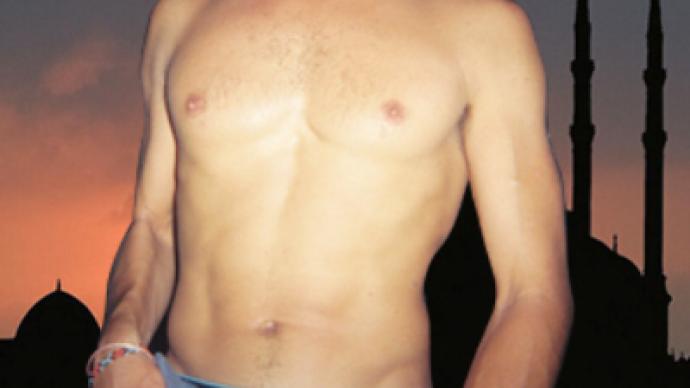
There is a small fairyland in which young Egyptian men head out to build their dreams, far from the gray reality back at home.
Dreams can be bought. Rushing from the mainland to Dahab, a Bedouin village in Sinai, young Egyptian men searched for a better life. They found it. It is not what they thought they would be growing up, but for them it was a revelation – some fun, some guilt, some compromises. A ride to a Disneyland of love, sex, sin, and money. Thinking optional.
Dahab (meaning “gold” in Arabic) is 80km northeast of Sharm El-Sheikh. Life is stretched along the beach; a man-made lagoon is a kite-surfing spot by daylight and a lovers’ spot by moonlight. Al-Masbat is where tourism reigns (a couple of discos, gift shops, camps and a line of laid-back restaurants). Al-Asala is a village where the Muzeina Bedouin tribe predominates. There are around 10,000 Bedouin (one of 15 major tribes of the Sinai), 20,000 Egyptians from the mainland and 3,000 foreigners living or working in Dahab.
Women on the beach
A plastic bag, full of spiky sea urchins struggling for their life, left the hands of four boys and a man painted in red. I instantly remembered him – Tarek – and he called me by name. We met back in August of 2006 when I was in Dahab after the terrorist attack (April 24). Too many local souls were psychologically traumatized and left to recover on their own ('thankfully' Dahab has access to sex, drugs and alcohol). The terrorist attack killed 30 and dragged the small resort on to the front pages.
Nikki, from Hungry and in Dahab for 7 years, had a point when she says that the place is not a backpackers' Mecca, as money has brought its evil trio along – jealousy, anger, and competition. Nikki is leaving in two months from a place she has called home. Later, the boys would pull the spikes from the sea urchins and carve another tourist's name (Vincent, John, Liza, etc) on the spikes and sell them for $4.
The sea urchin hunt was interrupted for a moment as a lonely lady walked on the dead corals on the horizon. The boys and Tarek (married) asked me, with hope in the corners of their smiles, if I knew the lady. Although sporting a mutton-dressed-as-lamb bikini, her aging curves could not keep up with the optimistic intentions of her swimwear. If luck was on the side of this sunny day's encounter, a boy could get sex and spoils (even a getaway) and the lady in the colorful bikini could re-experience the good old days. It was not.
But I have seen a time when it was: ladies walking hand-in-hand with men young enough to be their sons, dancing with young, smooth, masculine hands on their hips, or into the night, crawling to the lagoon where such unions are possible.
While the others are sleeping
Dr. Mohammed Eraqi is a lecturer in tourism at the University of Egypt. He told me that the problem here could be solved with a new governmental policy, focusing on high quality tourists, with a focus on tourism businesses’ social responsibility. “This [sex tourism] could be fixed by creating new good jobs depending only on qualified people instead of those young people. Also, Egypt needs to concentrate on high-quality tourists who are richer, and more responsible toward host destinations, such as eco-tourists, instead of mass tourism.”
Shaikh Mohamed El-Rafai is good at preaching back in Masbat's mosque, where the boys go to pray, especially for the Friday services. He knows which buttons to press. Shaikh El-Refai moved to Dahab six months ago with his wife and two young daughters. “It is because they lost the connection with their religion [Islam],” and through fear, the connection can be re-established, he believes.
Mustafa Abdalla is an anthropologist and Ph.D. candidate at the Free University of Berlin. He has published a book “Beach Politics: Gender and Sexuality in Dahab”. It’s a small book. “The phenomenon that started under the Israeli occupation, when foreign women came to Dahab to establish relationships with the ‘exotic, oriental’ men, continued after Sinai returned to Egyptian sovereignty,” Dr. Abdalla says. He concludes that female tourist accounts in Dahab are part of a post-colonial discourse of ‘exotification’ and ‘racialization’.
Fear. Policy. Illumination. Discourse. Emasculation. Meanwhile, as we – outsiders – try to pin down the sense of it, 25-year-old Mohamed is married to a Swedish woman (older than him), running a restaurant, learning English, hooking up with young French girls, and going back to his new flat (paid for by his wife).
30-something Ahmed (he quit drugs and became religious) works in a restaurant for pennies, and has been married for a year to a 40-something British woman, who occasionally descends from luxurious Jersey to visit her husband. And 25-year-old Romario (or Ramadan) is discovering, as I write, the beauty of this discourse. “I made her happy yesterday,” he told me the other day.
Love saga
“I can’t waste time on long-distance relations. There are a lot of women here, look around!” Osama, 28, points out Dahab’s seafront promenade at night, blossoming with tourists of all races, ages, statuses and clothing quantities. Osama is married to Caroline, who is now back in her home country (Canada) arranging his papers, in order to take her lover abroad.
Under the dubious marriage contract (Urfi marriage), the couples can avoid local police harassment, spend nights together in a camp or a hotel, or rent a flat, and – for the boys – to have their consciences “clean”. Remnants of guilt can be cleansed by Friday prayers and Ramadan fasting (Osama asked his Canadian wife to be patient and visit after the Muslim Holy Month, “what will I do with her during Ramadan? It is a harem!” After Ramadan, Dahab will experience the influx of foreign wives).
“Did you hear that Michael Jackson died?!” I say to Montaser. “So what if he died? What good did he do?
Unlike Sheikh Abd Al, Hamid Keshk [a Muslim scholar and a vocal critic of the Egyptian government between 1960s and 1980s, known for his humor] inspired thousands with his Friday sermons. You know he used to pack his bag and keep it waiting after his Friday sermons because he knew he would be arrested right after. He opposed the country's regime.
He finishes his prayer, grabs his bag and hops into the police car that was waiting. I listen to his cassettes, and I even shed a tear. He was a great man. Have you heard of him? No.”
At 14, a strange man gave Montaser a ticket to Dahab when he served him at the street coffee shop in Cairo where he used to work. He said to the young boy that he had only a couple of hours to catch a one-way bus to Dahab. Heading into to the unknown, Montaser lied to his parents.
Back then, Dahab was a village with 3 main restaurants (and even earlier, it was the Bedouin fishing village of Muzeina). And since then, he has never left Dahab. “It [Dahab] is addictive like heroin!” he exclaims. It is not just a resort, but also a home.
At 23, Montaser got married to a Danish woman, 25, so they could get a room in Cairo. After several months, he ran away from “the chemistry” and split up. “I will not do Urfi marriage again unless I feel it is right.” Montaser told me that nowadays women arrive prepared, and usually initiate Urfi marriage themselves.
Montaser is perhaps not active like his roommate Nasser, who had a story for me about a woman every day.
“Mona, the thing is that I am like a sarookh (rocket),” he boasts of his potency.
“I met this woman from Hungary, not an inch of imperfection on her [referring to her 90-60-90 measurements], she wasn't happy, but tomorrow I will make her happy, the point is taking it slowly.”
And because Nasser is like a sarookh and knows the fine points of the game, he gets small spoils (imported gifts, perfumes, fancy dinners, etc.) and the big ones (sex and a potential getaway ticket).
Beach boys
Italy, Greece Croatia, Turkey, Spain, The Republic of Macedonia, Lebanon, Jamaica, Dominican Republic, Barbados, Bali in Indonesia, Phuket in Thailand, Gambia and Kenya are the primary destinations for female sex tourism. Tunisia, Morocco, Fiji, Ecuador and Egypt are lesser destinations.
“Everybody is doing it [mixing with foreigners] plus the economical situation, so he jeopardizes his traditions and masculinity,” Wael Sakr, captain at the Dahab’s tourist police station, tells me.
He has been in Dahab since 2001. Dahab’s alternative is not looking good – unemployment (9.4%) and frustration from the financial impossibly of getting married. Dahab is easy. Male prostitution? Dahab is unlike good Jamaican loving for $150 – no price tags. None of the boys, and neither the police nor the lawyers who register the marriages would call it male prostitution.
“As long as it [relationships/courtships] bring bread for the people, then let it be,” says Ali Ayish, the owner of a successful real estate agency in Dahab, and a Bedouin from the North.
The police come and have a look at the papers but do not really interfere as long as the flat is rented in a foreign name. Ali moved to Dahab in 1990, watched it transform, and does not mind the change, as long as tourists keep coming in and he is in business.
Friday
As I sat down at a local coffee shop, I saw flocks of young Egyptians coming together at Masbat’s mosque to listen to Sheikh Mohamed El-Rafai’s Friday sermon.The Sheikh throws carefully into his sermon the reference about the painful divine punishment for adultery and God's forbidden marriage.
“I am glad I am here, I am fulfilling my mission as a preacher,” Sheikh El-Refai says later at his place, while his daughters and wife serve lunch.
The men come to him in private and ask about their Urfi marriages with foreign women, or their pre-marital sexual relations. The Sheikh warns them about God's punishment.
“There was a guy Urfi married to a Russian woman for two weeks. He came to talk to me because he felt guilty, I talked to him seriously and he split up with the woman right away.” The Sheikh offered me a cigarette which I declined. Cigarettes have their own dark reputation for women within this culture (bad girls smoke, I got the message).
“Adultery wears down a man’s stamina,” the Sheikh continued, “when you go sleep around and go back to your wife after and it does not work. But the one who does not do adultery is strong.”
He offered a cigarette again. I told him again I do not smoke.
“What about your kids growing up a street away from this “sinner land”? I ask.
“If you raise your kids according religious principles, showing what is good and what is bad, I do that with my daughters, then they will not come near the sin.”
But in practice the Sheikh will send them back to his hometown, Beni Suief, to join his older two children. He will not take that risk.
The contrast of the boys’ behavior is how they balance their lives in Dahab. Just like everybody here from the police and lawyers to the boys themselves say, “Dahab is a whole world within a bigger world” – which is Egypt.
And as I watch young Egyptians gather up for Friday prayers, I know that by the evening I will see familiar faces swallowing glucose-based alcohol cocktails chatting up foreign tourists and dancing to foreign electro beats at Dahab’s disco “Rush”. Friday is when a saint and a sin come together.
Read "A ride to a dream (part two)"
Mona Abouissa for RT