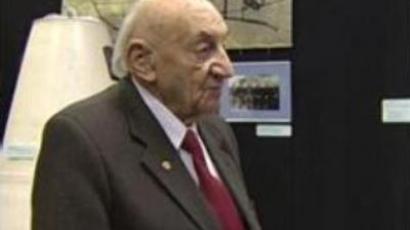
Soviet space patriarch dies at 99
Published 14 Dec, 2011 13:28 | Updated 14 Dec, 2011 17:53Rocket designer Boris Chertok, a man whose name figures in almost every major Soviet space achievement and one of the greatest space pioneers in history, has passed away at his home in Moscow at the age of 99
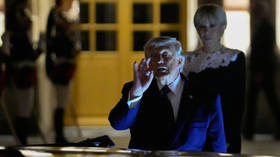
Boris Chertok was born in 1 March 1912 in Lodz (today Poland). From 1940-1945 he studied at the Moscow Power Engineering Institute. In 1945-1946 he took part in the examination of the captured rocket industry of Nazi Germany.In 1946 he was enlisted with NII-88, secret rocket design bureau headed by legendary Sergey Korolev, the founder of the Soviet space program. For many years Chertok was deputy to the father of the USSR space exploration program. Chertok designed control systems for rockets and space apparatus. He was responsible for control systems of the world’s first intercontinental ballistic missile and was one of Sputnik’s chief developers. Up to recently he still led and active life and often appeared in public. He gave several interviews to RT. Few people know his name. Nevertheless he is a legend of Soviet and Russian space science. Boris Chertok was one of the men who made space accessible. Born into an age of wooden and canvas airplanes, he found himself on the forefront of early space exploration.At 99, Chertok still worked, drove his car and gave lectures to the students.
His life in space
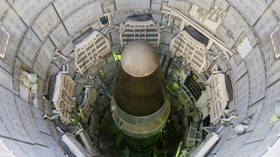
Boris Chertok’s career took off in post-war Germany, where he went as a member of the Soviet team searching for the remnants of the Nazi V2 rocket program.“I consider it one of my achievements that in 1945 we managed to create a scientific research institute right there in Germany, in contradiction of all international agreements,” Boris Chertok said.Not long after Chertok met Sergey Korolev, the person who managed to persuade Soviet leaders that rockets were worth funding, and that they were the only way to deliver a nuclear warhead.It took years of intensive work before Korolev's rocket-design bureau had a prototype ready to fly. Boris Chertok oversaw missile assembly at the new Baikonur Cosmodrome in the remote steppe of Kazakhstan.“Muddy drinking water was all we could get there amid dust storms and temperatures soaring to over 40 degrees. We had countless sleepless nights in the process of rocket tests, but I now remember all this as one of the happiest times of my life” shared Chertok.In August 1957, the R7 rocket became the world's first intercontinental ballistic missile.“I like being next to the model or the real R-7 – because it was this rocket that secured a breakthrough into space and opened the Space Era. Even today it is still being used, in modified form of course, as the most reliable space launch vehicle," Chertok recalled.To Chertok, each new rocket was like a beloved woman. R-7's high thrust and payload capacity, unmatched at the time, made it the perfect vehicle to launch an object into orbit — something never done before.“We prepared the launch of Sputnik without any great expectations. If it were to succeed, great. If not, no big deal. Our main task was to get back to building a missile capable of carrying a nuclear warhead,” he revealed.“It took us – the Sputnik creators – four or five days to realize that the history of civilization could be divided into before the launch and after," he revealed.And in his life there would be plenty more. Chertok was part of the team that sent the first man into space, and later was key to designing the control systems of the Mir Space Station.Nevertheless his name is forever tied to the first man-made object in orbit. After years of secrecy his name first appeared in newsprint in a 1987 article commemorating the 30th anniversary of Sputnik.However his unique life story is not lost. He left behind several volumes of memoirs called “Rockets and People”.It is the best source of information about the history of the Soviet space program, something Boris Chertok built his whole life with his own hands.
Yury Karash, from the Russian Academy of Cosmonautics thinks that “Rockets and People” is one of the greatest Chertok achievements, calling it a “revolutionary book” and “an encyclopedia of the Soviet and Russian cosmonautics.”Karash describes Boris Chertok as a “man totally dedicated to what he was doing,” who “was born in the right place in the right time,” to engage with Russia’s space science from its very beginning.Nowadays, Karash thinks, the space industry is in decay. It focuses too much on “near Earth space,” he says, while in order “to appeal to people’s imagination and hearts space program does have to offer to people something dramatically new.”