Cancer: NATO’s time bomb in the Balkans
Tuesday marks the 10th anniversary of the beginning of the three-month NATO bombing campaign of the former Yugoslavia – and a decade later, the wounds of the war are still felt.
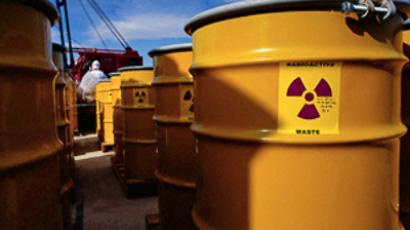
Throughout the areas which have been affected by NATO bombings, hundreds of people are dying of cancer. Experts say that this may be a result of uranium shells being used.
A little cemetery in Bratunac, Eastern Bosnia became the final resting place for a number of cancer victims. A local resident, who preferred to remain anonymous, gave RT the names of some who are buried there. He says they all died of cancer.
Djoko Zelenovic, who worked in the local military repair factory, died from the disease at the age of 65. The 35 year-old mother of two small children also rests here.
There used to be no more than one or two funerals a year in this small Serbian village in Eastern Bosnia. Since NATO dropped bombs on Sarajevo in the summer of 1995, the number has climbed to as many as one or two deaths a month.
Nikola Zelenovic’s parents are buried here. He says they were healthy until the NATO bombings and is now spearheading an investigation.
Nikola says that “my family lived throughout the war years in the town of Hadjici. My father was working in one of the factories there when NATO bombed it. His health problems started soon afterwards. He died from lung cancer. My mother died a year and a half after him from Leukemia. My parents were never sick before.”
Starting on March 24th, 1999, for three months NATO bombed Serb targets in the Former Republic of Yugoslavia. Four years earlier its forces had bombed Bosnia-Herzegovina.
Their aim was to end the fighting between Serbs and Albanians who lived in the areas.
But they left a time bomb behind them. In the years that followed, hundreds of people living in the areas that were hit have died of cancer
In Kosovo, the number of cancer patients has grown three times over the last ten years, while in Bosnia-Herzegovina, already more than a thousand people have died from cancer.
Doctor Slavko Zdrale has treated several cancer patients over the past years and boldly advances theories on the subject:
He told RT that “a few years ago we started noticing that there was as many as five times the number of people dying of different kinds of cancer as compared to the number of people who had been sick before the war.”
“We worked out that 90% of them came from areas NATO had bombed and from areas where ammunition with uranium was used. Nobody in the international community took much notice until Italian soldiers who were stationed in those areas started dying from cancer-related illnesses.”
In Pale, Bosnia-Herzegovina, the war crimes court is recording evidence of an increased number of cancer patients. The court says that the pieces of ammunition found in the bombed areas had a much higher level of radiation than is internationally allowed. Investigators are convinced that this radiation is the underlying cause of cancer.
Simo Tusevljak, the coordinator of the Research and documentation of war crimes, stated that “we believe that this was a deliberate attempt by NATO forces to kill as many people as possible. It was also a chance for the West to test new weapons.” .
“But there is nothing we can do,” he added. “We cannot file any complaint against NATO because all those involved have diplomatic immunity. A NATO soldier can kill and never be prosecuted. But perhaps one day some senior officials from NATO who ordered the bombings will be prosecuted. I believe the order came from high up.”
NATO hasn't commented on the claims and has dismissed Serbian and Italian investigations.
There has been no other independent research conducted on the subject.
The little cemetery in Bratunac is already full. But locals fear the number of cancer victims will continue to grow for at least the next fifty years, or for as long as it takes for the air to clean.
Ten years after the NATO bombings, the alliance still has a lot to answer for. But no matter when those answers come (or whether they will come at all) they will be too late for the cancer victims.