Abbas to RT: We want to co-exist with Israel – independently
Despite pressure from the US and Israel, the Palestinian Authority has refused to accept the Israeli vision of the Middle East peace process and will continue to petition for UN membership status, the Palestinian leader, Mahmoud Abbas, has told RT.
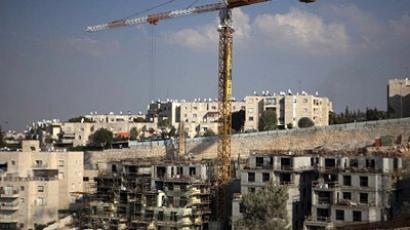
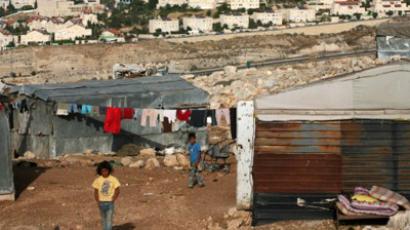
America, the only member of the UN Security Council that has not supported Palestine’s bid for statehood, calls frequently for democratic change in the Middle East. Yet it remains reluctant to acknowledge the rights of Palestinians to self-determination, believes the President of the Palestinian Authority.RT: Mr Abbas, Moscow is the final stop on your European tour. Palestine is still waiting for a resolution to the statehood issue. What do you expect from Russia’s leadership at this stage, when the issue of Palestinians’ legal rights is being decided according to international law?Mahmoud Abbas: The Russian Federation, as well as the Soviet Union before it, has been regarded as one of the key and principal hopes for the Palestinian people. Since the 1970s when the late Palestinian leader Yasser Arafat visited Moscow, our nations have enjoyed good relations. It’s not only the result of the role that Russia plays in the region, but also due to the fact that Russia is a great power, a member of the UN Security Council and a member of the Quartet of Middle East mediators. This is why we focus so much on strengthening our relations and this is why we expect Russia to play a positive role. Recently, the Quartet took a number of steps calling for negotiations. Without doubt, we coordinate our position with Russia and several other countries to get an understanding of where Palestine stands, what it should do and what it shouldn’t. This is why we visited the UK, Germany and have now come to Russia. We hope that the talks with Israel currently underway in Jordan will result in a positive outcome. In case they fail, we would need to have a list of further steps to be taken, and in putting together that action list we want to listen to the opinion of the countries I just mentioned, and Russia in particular. RT: Mr President, talking of negotiations, some time ago you said the Quartet was leaning towards Israel and you froze the talks for 16 months. What prompted you to start those so-called exploratory talks with Israel in Oman, talks that revealed many contradictions across several areas of the peace process, talks that have apparently failed to yield any positive results so far?MA: True, these meetings revealed a lot of contradictions in our positions. Those were talks just for the sake of talks only, unfortunately. But we do not want to miss a single opportunity. We have never ceased negotiating with Israel. Even with George Mitchell as the US envoy, we continued an exchange of opinions at the meetings held within exploratory or indirect talks. We have never shunned mutual contacts. To be honest, we’ve never broken off negotiations with Israel. RT: So there was no 16-month pause?MA: There were no grounds for negotiations, because of Israel. The basis for negotiations is the acceptance of the 1967 borders or any other positions agreed by both parties. This is not our unilateral stance, it is the position of the international community. Of course, it’s closely linked with the issue of security, which is a huge problem for us. We do not accept the Israeli concept of security. It would mean another 40 years of occupation of our legitimate territory. This concept’s name is further occupation.RT: You’ve often been criticized for saying there’s no point in continuing the 20-year-long negotiations. That has put you under constant pressure from the US and Israel. However, you have repeatedly fought off those accusations, saying that there’s no alternative to peace talks. Why are you so confident?MA: There is no alternative to peace talks. At the moment, we are assessing and testing the ground for future talks to comply with the Quartet’s demands. RT: For some Israeli officials, the negotiations are just a way to gain time. They say the talking games will not bring about solutions or agreement but will make time for those who know how to use it. Zionists know how to use it. What stands behind that statement?MA: It means they want to preserve the status quo, something we completely reject. All illegal settlements, all illegal buildings must be torn down, removed from the Palestinian territories. Perhaps the Israelis have a different vision, although in the past they left their illegal settlements on the Sinai Peninsula and Sharm el-Sheikh and returned back to their borders. We have the same situation in Lebanon. They will leave some of the settlements there. Even with that, they want to preserve the existing situation on the Palestinian territories and seek to convince the international community to accept that. They want to make us accept this vision but we will never accept it.RT: Benjamin Netanyahu said that he gave you a 21-point proposal detailing the Israeli position. By doing so he refused to meet in Ramallah despite his earlier promise. What is that document all about?MA: I met him three times in September 2010, first in Washington, on an invitation from President Obama, and a second time in Sharm el-Sheikh. The third time we met was on 25 September 2010 at his house in Jerusalem, where we talked for four hours and discussed all the issues, yet the talks ended with no positive results – no discontinuation of the development of the Occupied Territories, no changes to security policies “the Israeli way” – they intend to occupy the West Bank and the Heights for another 40 years. This is colonial policy and colonialist logic. This is not the logic of a person interested in constructive talks and peaceful coexistence with his neighbors. I do not refuse to meet, but I need to have a good reason. Now I get this 21-point proposal, and what are these 21 points? Are they just some headlines, or indeed a list of 21 issues that need to be addressed by our peoples? As of today, we only need to discuss and solve two issues: borders and security. Why would we want to add more issues to our agenda? Did he think it was some sort of a secret? But it is not news and it’s not of any practical use either. It is not appropriate for a prime minister to submit this way a document that simply enumerates some issues such as borders, security, the Jewish state, etc., with no clear indication of what is actually expected of the other party.RT:Do you think current events in the Arab world could strengthen your position in the peace talks and help to resolve the Palestinian issue internationally?MA: There is still no clear position common to all Arab countries. Yes, there are revolutionary changes taking place, but it will take time to figure out what results they have brought about. The countries we want to work with in order to strengthen our position still need time to get back on their feet and build their states under the new conditions. However, the general Arab stance on the Palestinian issue has not changed. The people who lead these revolutions are the same people who supported the Palestinians in their pursuit of independence, and these people have not changed. What has changed is their attitude towards their leaders and their governments, but that is their internal matter and we don’t get involved. The Arab stance on the Palestinian issue has remained the same.RT: Mr. President, you promised the Quartet that you wouldn’t take any action at international level until January 26th. But if the talks do fail, according to Nabil Shaath (Acting Prime Minister of the Palestinian National Authority), you have plans to mount unprecedented diplomatic pressure on Israel, to make it feel completely isolated, rather like South Africa, when the international community condemned apartheid. Is that true?MA: We want to live together, to co-exist with Israel. But at the same time we want to stop its illegal settlements on the land that doesn’t belong to it. We want to tell the world that Israel’s policy is unlawful. Their occupation of our land is illegal. But we are not saying that Israel as a state doesn’t have a legal right to exist. So the diplomatic campaign underway is legal. We have already been recognized by 130 states, and I am sure that in the near future the list will grow to include 150-160 countries. It is our duty to continue this work. What is going to happen after January 26th? At the beginning of February, the Arab peace initiative follow-up committee will hold a meeting where we will present a full report on what has been done and what still needs to be done, as well as our vision of the future of the peace process. We will work out our final positions based on the committee’s decisions. But we don’t want to pile up all our plans. There needs to be a certain order.RT:Mr. President, your address to the UN General Assembly was very emotional. It could truly be called an historic event. But as it turned out, it still wasn’t enough to convince nine members of the UN Security Council to grant the Palestinian Authority the status of full UN membership. Would it be possible to continue with the talks if you agreed to the status of a non-member observer state?MA: In the UN Security Council we received eight votes, but we need nine. Still, we are not upset. Everyone is pressured to vote against our membership. Today, we refuse the idea of being a non-member observer state – though everything is possible. I am not saying that it can’t be – everything is possible. If you ask me about the official position of the Palestinian state on this issue, I will give you the answer – we seek full membership. We will apply for a second, for a third time etc., until we get our bid approved.RT: In a number of Arab countries, people are now obsessed with the idea of overthrowing existing regimes, while Palestine has embarked on the path of reconciliation. Mr. President, why did the attempt to create a national unity government end in failure, and in general, what has been achieved in terms of social and political reforms? MA: First of all, our attempts did not fail. We do not wish to create a national unity government. My personal suggestion was to create a neutral transitional technocratic government, a non-aligned government comprised of experts that would work until the election. This is not a national unity government. And its creation is already under way. We have achieved agreement on many issues. And I sensed some significant political improvement during the talks in Cairo, when Hamas delivered an agreement. There was an abyss between us earlier. Now, they have agreed to switch to a non-violent standoff mode with no more bloodshed. They agreed with the requirement of establishing the 1967 borderline and to running the election in May this year. That means we can talk about progress here. Our committees are working hard to implement these plans as soon as possible. Reforms are under way, and the government will be a transitional one.RT: Thank you very much for being with us today. We wish you every possible success in the implementation of political reforms and the creation of a sovereign Palestinian state.